There’s a particular kind of dread that comes with airport uncertainty. You’ve booked your flight, packed your bags, confirmed your hotel abroad and then the question hits: Am I giving myself enough time? For domestic flights, most experienced travelers have a reliable sense of timing. International travel is a different equation entirely.
This international flight arrival time guide is designed to answer that question precisely, with practical detail for first-time overseas flyers and seasoned travelers alike. Whether you’re departing from Philadelphia International Airport (PHL), connecting through a major hub like JFK, or catching a transatlantic red-eye, the rules change the moment a passport is involved.
The 3-Hour Standard And When It Isn’t Enough
The Transportation Security Administration and most major U.S. airlines recommend arriving at least 3 hours before departure for international flights. That’s the widely accepted baseline, and for many situations, it holds up well.
But “baseline” is not the same as “always safe.”
At large hub airports during busy periods, three hours can evaporate quickly. A long check-in line, a slow TSA lane, a secondary screening, a gate change any one of these can eat into your buffer. Stack two of them together, and a three-hour window starts to feel thin.
For first-time international travelers, or anyone unfamiliar with the specific airport they’re departing from, 3.5 to 4 hours is a smarter target. The extra time costs you nothing more than a quiet meal or a comfortable seat near your gate. Missing an international flight costs significantly more in every sense.
What Actually Determines Your Arrival Time Abroad
Understanding your scheduled arrival time is almost as important as knowing your departure. International flight arrival time calculation involves more moving parts than most travelers realize.
Here’s what determines when you land:
| Factor | How It Affects Arrival Time |
|---|---|
| Time zone difference | Arrival shown in destination local time |
| Flight duration | Based on routing, aircraft type, winds |
| Weather conditions | Can lengthen or shorten flight time |
| Air traffic control | Rerouting adds time; favorable conditions reduce it |
| Airport operations | Runway congestion, ground delays at destination |
The time zone piece is where confusion most often surfaces. Your ticket might show a departure from Philadelphia at 9:00 PM and an arrival in London at 9:30 AM the following morning. That’s not a brief flight it’s a time zone shift. The arrival time is displayed in destination local time, not departure city time.
This also explains why some international routes appear to arrive before they’ve technically “had time” to fly. A westbound flight from New York to Los Angeles crosses time zones in your favor, making the elapsed journey appear shorter on the clock. Eastbound transatlantic flights do the opposite hours gained en route appear as hours “lost” when you arrive.
Always confirm the local arrival time at your destination, especially when coordinating ground transportation, hotel check-in, or onward connections.
Scheduled vs. Actual Arrival: A Distinction Worth Understanding
Every flight has two versions of its arrival time: the scheduled arrival and the actual arrival.
The scheduled arrival is what the airline published when you booked their planned landing time at the destination airport, expressed in local time. The actual arrival is when the wheels touch the runway.
These two figures rarely match perfectly. Weather systems, air traffic rerouting, late departures, and airport ground operations all influence actual landing time. On a given day, a flight might arrive 20 minutes early because of favorable tailwinds. That same route in winter storm season might land 45 minutes late.
What catches many travelers off guard is an additional distinction: landing time versus gate arrival time.
When a flight tracker shows your plane has “arrived,” that reflects the moment of touchdown not the moment passengers can exit. Taxiing to the gate, waiting for a parking position, ground crew clearance, and the jet bridge connection can add another 10 to 30 minutes before doors open.
For passengers being picked up curbside, this matters enormously. A driver who arrives at the published landing time may still be waiting half an hour before their passenger clears the gate.
How to Track Your International Flight’s Actual Arrival Time
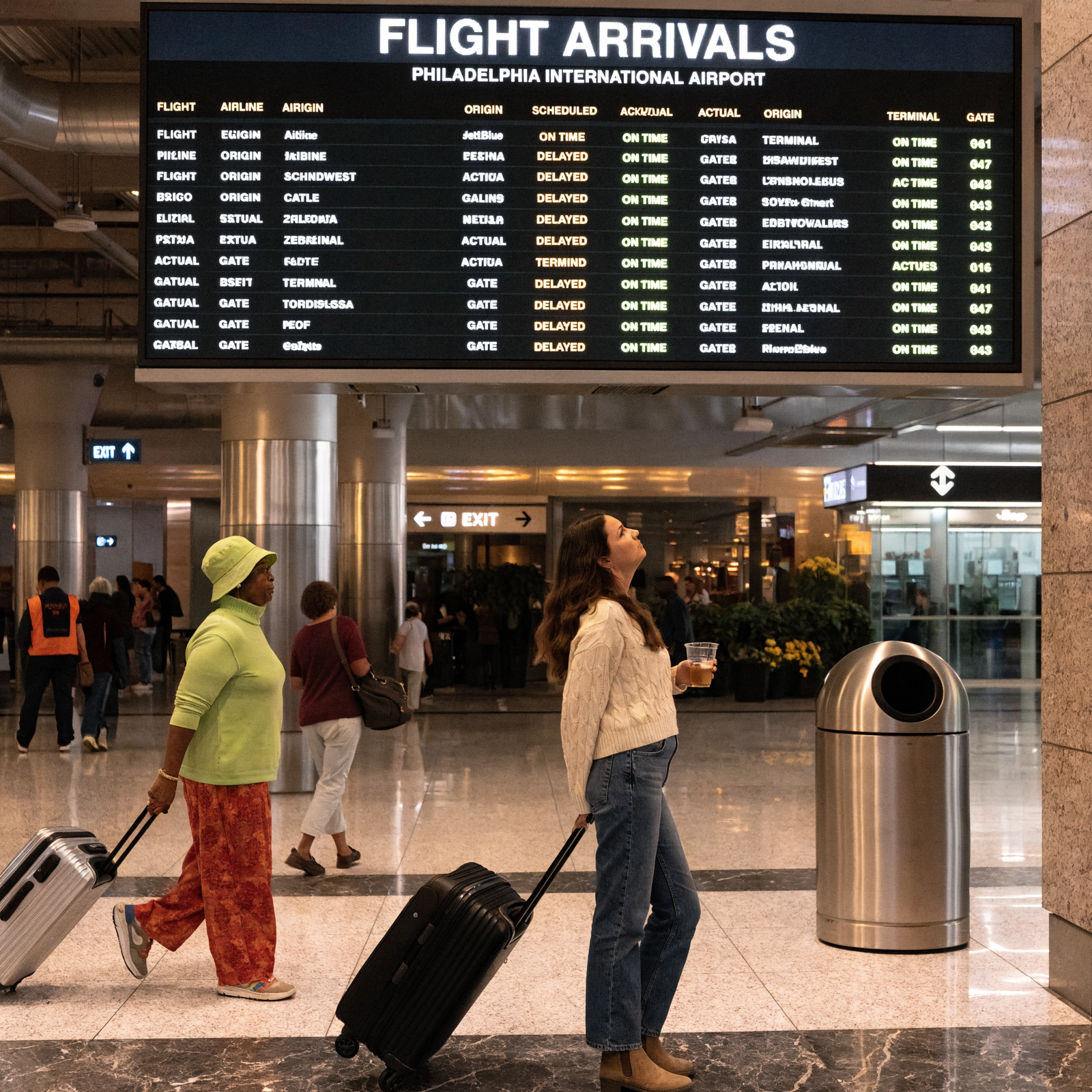
Real-time tracking is one of the most practical tools available to international travelers and those picking them up.
Reliable options include:
- FlightAware — Tracks real-time aircraft position, departure/arrival status, and estimated landing times
- FlightView — Shows scheduled vs. actual departure and arrival with live updates
- The airline’s own app — Most major carriers offer live flight status in the booking section
- Airline website (“Manage My Booking”) — Provides updated gate information and delay notices
- Google Search — Simply entering a flight number often returns basic real-time status
For families waiting at the airport and professional chauffeurs coordinating pickups, these tools provide the most reliable picture of where a flight actually is and when it’s expected on the ground.
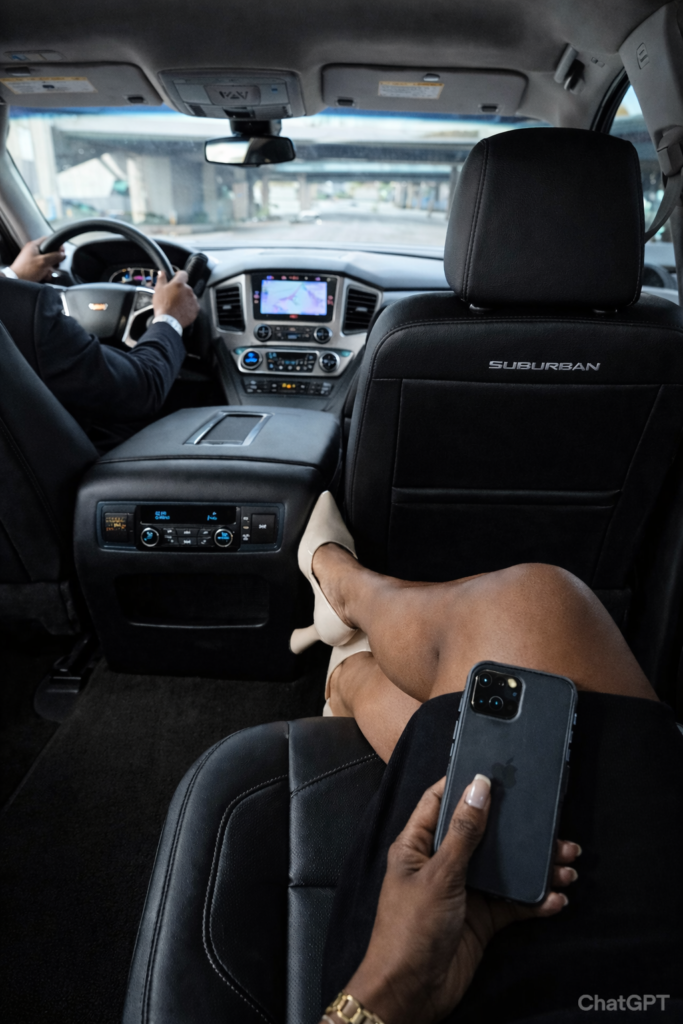
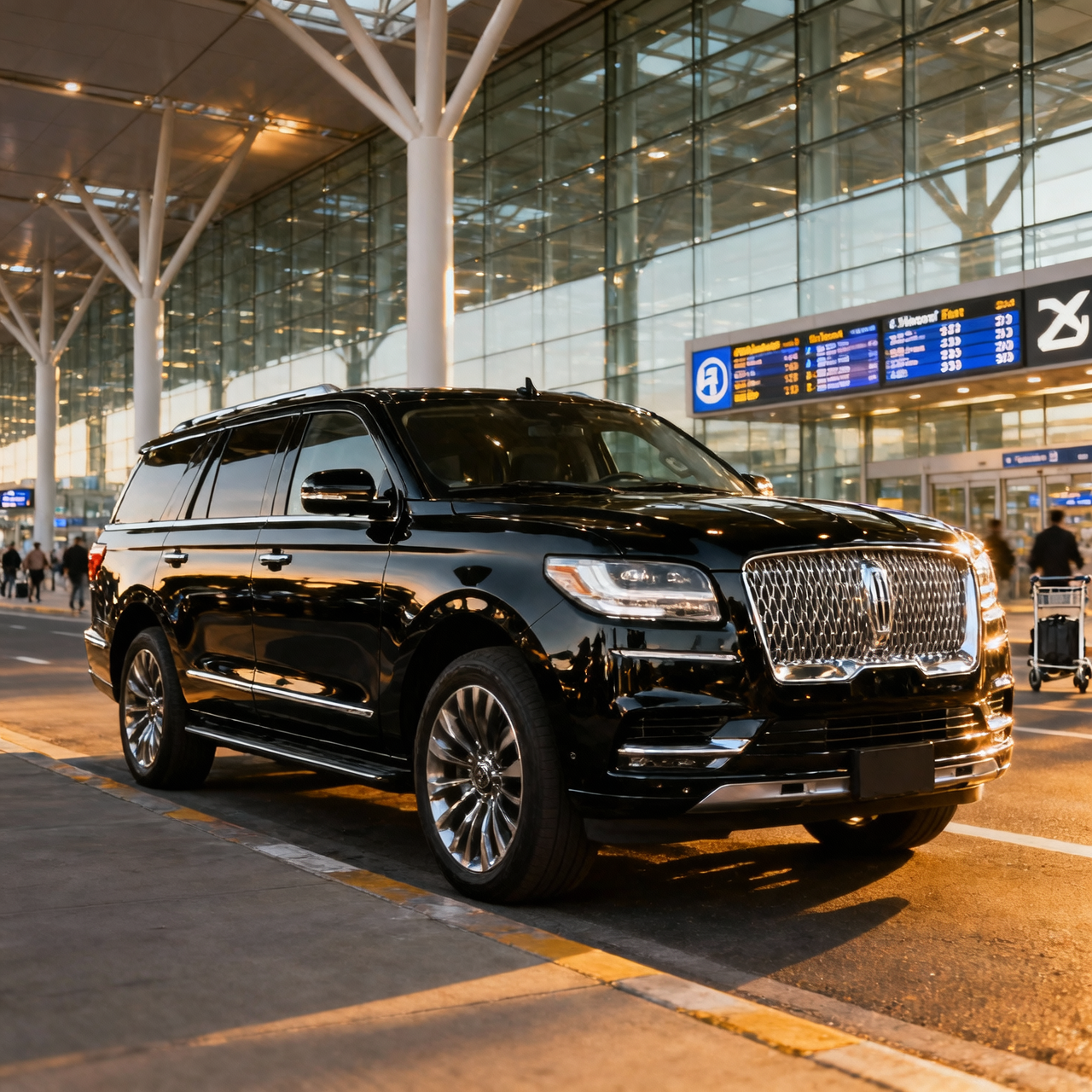
When you book airport transfer service with Delux Limousines, your chauffeur monitors live flight data in advance. If your international flight lands early or runs late, pickup timing adjusts accordingly no passengers stranded, no frantic calls from baggage claim.
Peak Travel Periods Demand More Buffer Time
If you’re flying internationally during a high-demand window, standard recommendations need to flex upward. Airports serving Philadelphia and the broader East Coast see sustained congestion during:
- Summer travel season (late June through August)
- Thanksgiving and Christmas/New Year’s holiday windows
- Spring break periods (typically mid-March through early April)
- Major national and regional events (when Philadelphia hosts large conventions, sporting events, or concerts that drive departure surges)
During these windows, 4 hours before departure is a genuinely reasonable recommendation for international travelers particularly those checking bags, traveling with children, or departing from a large hub like PHL, JFK, Newark, or O’Hare.
The check-in counters at Philadelphia International see notable volume on peak Fridays and Sundays. Security lanes, even with TSA PreCheck, can run longer than normal. Factor in the time to reach the airport from Center City, South Jersey, or the Main Line, and the calculation starts well before you leave home.
Checked Bags Change the Calculus
Traveling light with just a carry-on offers flexibility. The moment you add checked luggage to an international trip, the timeline tightens.
Checked bag cutoff times for international flights are strictly enforced. Most airlines require bags to be checked at least 60 minutes before departure, with many international carriers requiring 75 to 90 minutes. Miss that window, and you may be boarding without your luggage or not boarding at all.
With a 3-hour arrival window, you have room to:
- Check in at the counter or kiosk
- Drop bags before cutoff
- Move through TSA screening
- Clear any secondary checks if needed
- Reach your gate with time to breathe
With a 2-hour arrival window and checked bags, any delay in steps 1 through 3 creates real risk. This is not the place for optimism over planning.
The “Airport Theory” Shortcut Doesn’t Apply Here
A trend circulating on social media sometimes called “airport theory” suggests that experienced travelers can arrive as little as 15 minutes before boarding and still make their domestic flight by moving quickly through a familiar airport.
That approach, even when it works domestically, has no place in international travel planning.
International departures involve processes that simply cannot be rushed:
- International check-in often requires passport verification at the counter, not just a kiosk
- Customs and exit processing at certain airports requires an additional documentation check before security
- Visa confirmation for certain destinations must be verified by airline staff before boarding
- Security screening at international terminals can be more thorough than domestic lanes
- Gate locations for international flights are frequently in separate concourses, sometimes requiring a train or extended walk
At PHL, international departures primarily operate from Terminal A-West. Reaching that terminal from other parts of the airport takes time, and the security lanes serving it can run long during busy periods.
The 3-hour recommendation exists precisely because each of these steps is unpredictable. Give yourself the full window.
Visa Requirements and Documentation: Allow Extra Time
Certain international destinations require travelers to obtain visas before departure, or to complete exit documentation at the airport. If your trip involves:
- A visa obtained on arrival at the destination (which you may need to confirm with airline check-in staff before boarding)
- A travel authorization such as ESTA for transatlantic travel or eTA for Canada
- Specific entry requirements tied to your passport or nationality
- Additional health documentation or vaccination records
…then you should account for added processing time at check-in. Even when documentation is fully in order, staff verification takes time, and errors in documentation are far easier to resolve with 3.5 hours on the clock than with 90 minutes.
If you have any uncertainty about your travel documents, contact the airline directly before your departure date. Do not leave document verification to airport check-in unless absolutely necessary.
What Happens When Your International Arrival Time Changes
Flight schedules shift. Weather systems develop overnight. Air traffic control imposes ground delays that ripple through connecting hubs. If your international arrival time changes after you’ve made plans on the ground hotel check-in, business meetings, airport transfers here’s how to respond cleanly:
- Check the airline’s app or website first — Status updates appear there faster than phone queues
- Call the airline’s customer service line if you need to rebook a connection or confirm a significant change
- Notify your ground transportation provider immediately — especially if someone is meeting you at the airport
- Contact your hotel if check-in timing is affected, particularly if arriving significantly earlier or later than expected
- Keep monitoring — departure delays don’t always translate directly to arrival delays, and conditions can improve en route
Delux Limousines clients traveling internationally receive direct communication with their assigned chauffeur. Arrival time adjustments are handled proactively, with real-time flight monitoring built into the pickup process.
[Insert image of professional chauffeur in formal attire waiting in arrival hall with client name sign]
Arriving from Abroad: What International Passengers Face at U.S. Airports
This guide covers departure timing extensively, but the return journey deserves equal attention. International passengers arriving in the United States face processing steps that can add 45 minutes to over 2 hours before they reach ground transportation:
- U.S. Customs and Border Protection inspection (all arriving international passengers)
- Baggage claim (international bags often take longer than domestic)
- Agricultural inspection if carrying food or plant products
- Passport control for non-U.S. citizens or residents
- CBP Mobile Passport or Global Entry kiosks for expedited clearance
Passengers with Global Entry or TSA PreCheck should still budget time, especially when arriving at congested hubs or during peak hours. PHL’s international arrivals process runs reasonably efficiently by major-hub standards, but high-volume arrival windows still create queues.
For those being picked up at Philadelphia International Airport, the arrivals area for international flights is accessible from the lower level of Terminal A-West. Confirming exact pickup location with your transportation provider in advance prevents confusion after a long overseas flight.
Frequently Asked Questions
When should I arrive at the airport for an international flight?
The standard recommendation is 3 hours before departure. For first-time international travelers, travelers checking bags, or anyone departing during a peak period, 3.5 to 4 hours is a better target.
How is international flight arrival time calculated?
Arrival time factors in the destination’s time zone, flight duration, routing, wind conditions, air traffic, and airport operations. It’s displayed in destination local time, not departure city time.
What is the difference between scheduled and actual arrival time?
Scheduled arrival is the airline’s planned landing time. Actual arrival is when the aircraft lands. These can differ due to weather, routing changes, or traffic congestion at the destination airport.
Why do some international flights appear to arrive before they depart?
This is a time zone effect. If you depart New York at 11:00 PM and land in London at 11:30 AM local time, the flight took roughly 7.5 hours — but the clocks in London run 5 hours ahead of New York. Arrival is shown in local destination time.
What is “padding” in flight schedules?
Airlines sometimes add extra minutes to scheduled flight duration to help flights arrive on time despite typical delays. This can make a route appear longer than it actually is, but it improves on-time arrival performance.
Is there a difference between airport arrival time and gate arrival time?
Yes. Airport arrival time is when the aircraft lands. Gate arrival is when the aircraft parks and doors open — which can be 10 to 30 minutes later due to taxiing and ground operations.
Planning Your Departure from the Philadelphia Area
Travelers departing from Philadelphia International Airport should account for travel time from their starting point before calculating airport arrival. Common drive times to PHL:
- Center City Philadelphia: 20 to 35 minutes depending on traffic
- Main Line suburbs (Wayne, Radnor, Bryn Mawr): 25 to 45 minutes
- South Jersey (Cherry Hill, Voorhees, Marlton): 25 to 40 minutes
- Delaware County: 15 to 30 minutes
- Montgomery County (Lansdale, Blue Bell, Horsham): 35 to 55 minutes
These figures apply under normal conditions. During rush hour, Friday afternoon departures, or storm events, add significant time. A 7:00 AM international departure from Center City, for example, requires leaving by approximately 3:00 AM to reach the airport by 4:00 AM well ahead of any traffic variable.
Professional airport transfer service removes this uncertainty entirely. Delux Limousines coordinates departure timing based on your specific flight, departure terminal, and point of origin so the margin for error is built in from the beginning, not hoped for.
A Note on Reliability When It Counts Most
International travel has higher stakes than a domestic weekend trip. The flights are longer, the connections are tighter, the documentation requirements are stricter, and the cost of missing a departure is far greater. Every planning decision including how you get to the airport compounds for better or worse.
Arriving with time to spare isn’t overcaution. It’s the difference between a composed, comfortable departure and an unnecessary scramble that sets a difficult tone for an entire trip.
If the journey matters, the preparation should match.
Ready to Arrive Without the Stress?
Delux Limousines provides professional airport transfer service throughout the Philadelphia area, including pickups and drop-offs at PHL, PHL international terminals, and regional connections to JFK, Newark, and beyond. Explore our full range of services or reach out directly to discuss your specific travel needs.
Follow Delux Limousines on Facebook, Instagram, LinkedIn, and Yelp for travel tips, fleet updates, and service announcements.
Call: 610-871-8784
WhatsApp: 267-988-3392
Email: reservations@dltsl.com