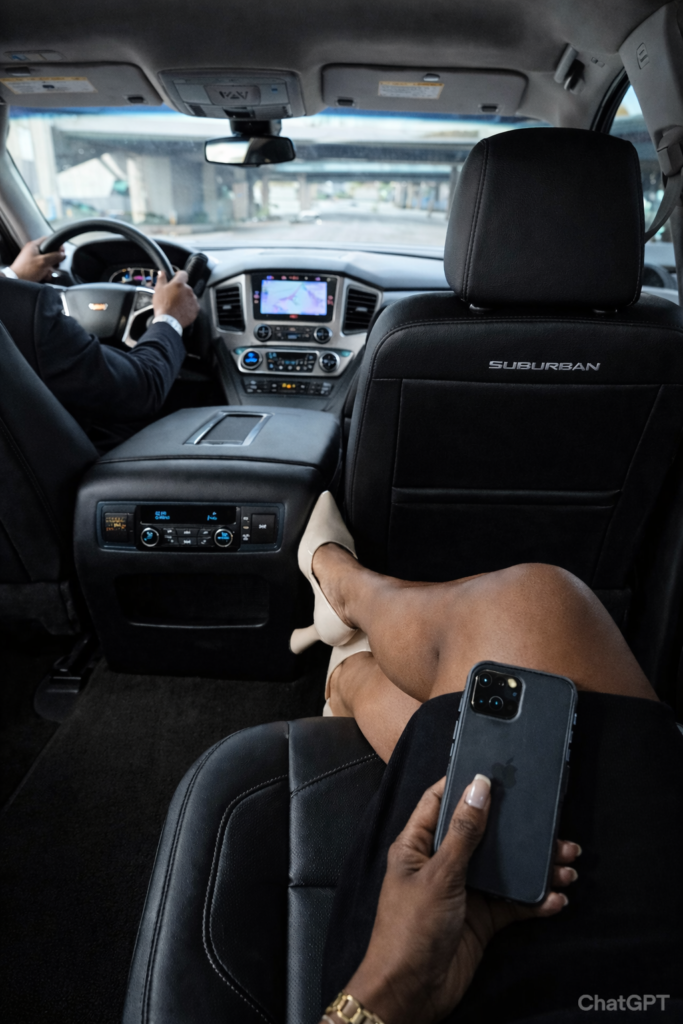
A Professional’s Guide to Selecting Ground Transportation That Protects Your Event

When Ground Transportation Becomes the Event Planner’s Blind Spot
In the world of meetings and events, ground transportation is consistently the last item added to the planning checklist and the first thing blamed when something goes wrong. Late executive arrivals, confused chauffeurs at multi-hotel pickups, vehicles that do not match the guest manifest, and communication that breaks down the moment the event begins these are not transportation failures. They are event transportation partner selection failures.
Experienced event planners understand that the right event transportation partner is not simply a vendor with a fleet. It is an operational extension of the planning team one that monitors flight changes in real time, deploys contingency vehicles without being asked, briefs drivers on VIP protocols before the first pickup, and communicates solutions rather than problems. The difference between a transportation vendor and a true event transportation partner is the difference between hoping transportation goes smoothly and knowing that it will.
At Delux Limousine Transportation Services, the planning conversation with event professionals begins well before event day. The questions below are the ones that experienced planners ask their event transportation partner candidates and the answers that distinguish professionals from the rest. Before reviewing them, explore the full range of event-capable vehicles and services at the Delux services page.

Question 1: How Do You Handle Last-Minute Changes on Event Day and Who Has the Authority to Act?
Every experienced event planner knows that no agenda survives contact with event day intact. Speakers run late. Flights are delayed by forty-five minutes at the exact moment the executive shuttle sequence begins. A venue changes its loading entrance at the last minute. The real measure of an event transportation partner is not the quality of the original plan it is the speed and composure with which they adapt when the plan changes.
A qualified event transportation partner does not escalate problems to the planner. It resolves them before the planner is aware they exist. This requires decision-making authority at the operational level, not a chain of approvals that slows every response by twenty minutes.
What to listen for in a strong event transportation partner:
- A dedicated operations or dispatch team monitoring the event in real time across all pickups and drop-offs, not a general call center.
- Clear escalation protocols that define who makes which decisions and within what timeframe including the authority to reassign vehicles and reroute chauffeurs without client sign-off.
- Empowered on-site leadership with the operational standing to act immediately when circumstances change, rather than deferring every adjustment to a remote supervisor.
A true event transportation partner expects disruption and builds its operational model around managing it quietly, so the event continues without the planner ever needing to intervene.

Question 2: Who Will Be Managing Transportation On-Site and What Is Their Actual Role?
Many transportation providers describe themselves as an event transportation partner but cannot clearly answer this question. “Support will be available” is not the same as having a named individual with defined responsibilities standing at the staging area throughout the event. Planners who do not ask this question discover the gap when they need someone accountable and find only a driver list.
For any event involving multiple vehicles, multiple hotels, staggered pickup windows, or VIP guests requiring individualized handling, an event transportation partner without dedicated on-site coordination is not equipped for the assignment. According to the Meeting Professionals International (MPI), on-site logistics coordination is one of the primary differentiators between satisfactory and exceptional event execution. The event transportation partner relationship must include this layer.
What to listen for in a strong event transportation partner:
- A dedicated on-site transportation captain whose sole responsibility during the event is vehicle management not driving, not customer intake, not scheduling.
- A single named point of contact for the planner, the venue, hotel concierges, and security someone who knows every element of the transportation plan and can resolve conflicts between them.
- Clear accountability for execution, not just scheduling. The on-site representative of a qualified event transportation partner takes ownership of outcomes, not just assignments.
For complex events, the on-site coordinator is the event transportation partner‘s most important asset. A planner who has experienced one event without this role will never plan another without requiring it.
Question 3: How Are Chauffeurs Briefed on the Event, the Guests, and the Brand?
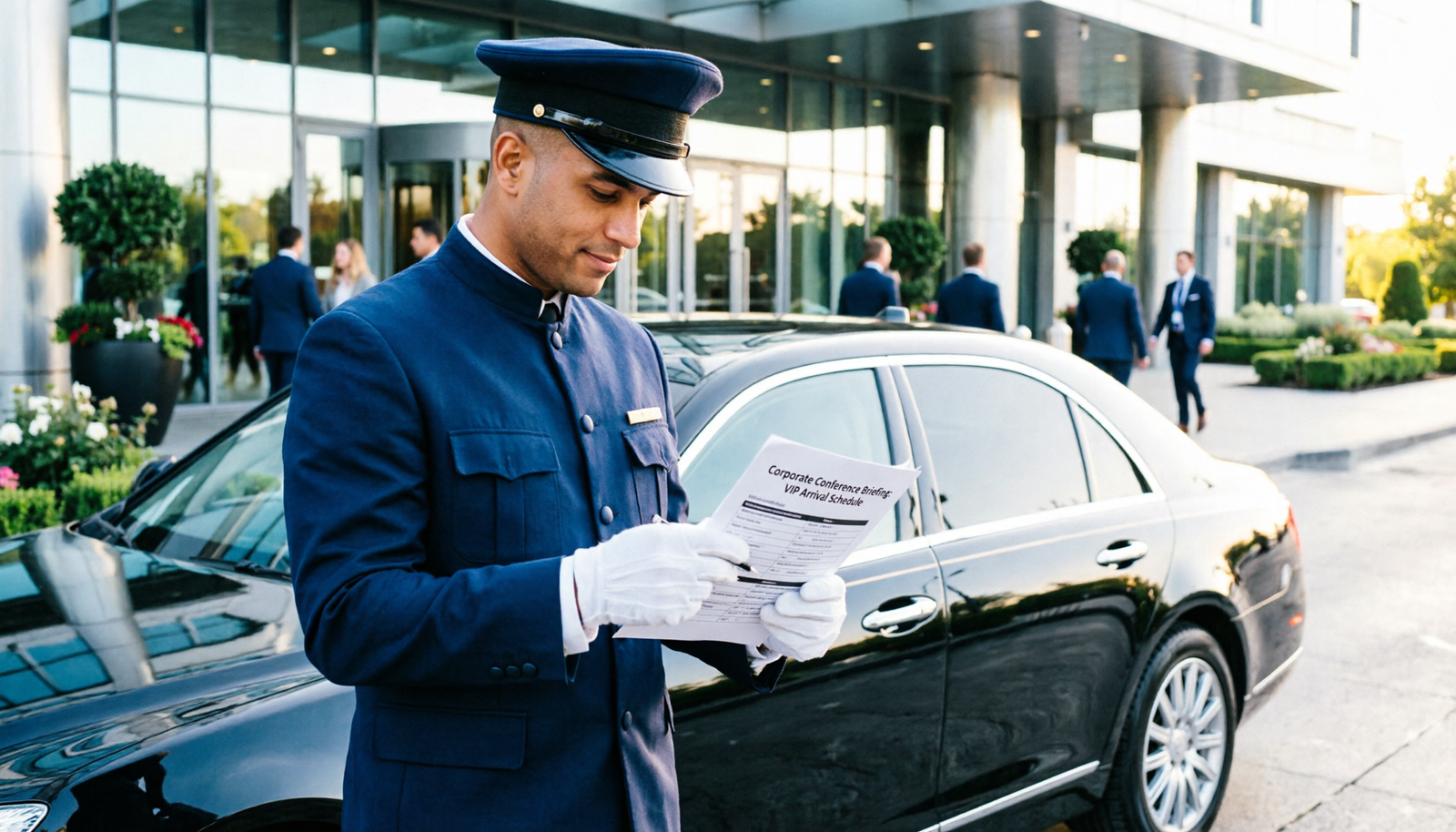
The chauffeur is, in most cases, the first and last in-person representative of the event that an executive or VIP guest encounters. An event transportation partner that treats chauffeurs as interchangeable drivers rather than briefed, prepared professionals is transferring reputational risk directly to the planner.
A chauffeur who does not know the guest’s name, does not understand the pickup protocol, is unaware that a particular attendee requires discretion around their presence, or is unprepared for a schedule change is not a neutral presence. They are an active liability. The standard that an event transportation partner sets for chauffeur preparation reflects its overall standard of professionalism and planners should probe this directly.
What to listen for in a strong event transportation partner:
- Individual chauffeur briefings that include guest names and profiles, VIP protocols, vehicle assignment details, and event-specific timing windows prepared before the first vehicle moves.
- Confidentiality and discretion standards that are trained into chauffeur conduct, not assumed. An event transportation partner serving C-suite executives must be explicit about the behavioral expectations it enforces.
- Prepared contingency responses for schedule changes so chauffeurs can absorb and adjust to new information without escalating stress or confusion to the passengers they are transporting.
Professional event transportation is as much about people as it is about vehicles. The best event transportation partner treats every chauffeur assignment as a brand representation decision, not a logistics task.
[ Insert image: Real-time flight tracking and event schedule on a dispatcher’s screen, with vehicle positions shown on a city map ]
Question 4: What Happens When Something Goes Wrong Before You Even Know About It?
This is the question that most directly separates a reactive transportation vendor from a proactive event transportation partner. Every planner has experienced the version of events where a problem is reported after it has already affected guests. A vehicle arrived late. A driver took the wrong entrance. A connection was missed. By the time the planner hears about it, the damage is done.
A genuinely qualified event transportation partner operates on a different model. The goal is not to report problems it is to resolve them before they reach the planner or the guest. This requires continuous monitoring, pre-positioned contingency resources, and a team culture that defaults to action rather than notification.
What to listen for in a strong event transportation partner:
- Continuous monitoring of flights, traffic, and weather across all event pickups not periodic check-ins, but active real-time tracking that allows the event transportation partner to initiate adjustments before delays compound.
- Pre-positioned backup vehicles and chauffeurs for high-risk pickups or high-profile guests deployed based on operational judgment, not client requests.
- Solution-first communication: when a planner is informed of an issue by a strong event transportation partner, the message is how it was resolved not a request for guidance on what to do.
The best event transportation partner relationship is one where planners can focus entirely on the event because they are confident the transportation side is being managed with the same professionalism applied to every other element of the program.

Question 5: How Do You Measure Performance After the Event Is Over?
The weakest version of an event transportation partner relationship ends when the last vehicle drops off the final guest. The strongest version includes a structured post-event review that holds both parties accountable for outcomes, identifies what worked and what did not, and builds institutional knowledge for the next engagement.
“Everyone arrived safely” is the minimum acceptable outcome, not a performance benchmark. A committed event transportation partner applies rigorous post-event evaluation because it understands that accountability after the event is what earns the right to be trusted before the next one. The Professional Convention Management Association (PCMA) identifies post-event debriefs as a standard best practice for transportation and logistics partnerships in the meetings industry.
What to listen for in a strong event transportation partner:
- On-time performance data broken down by pickup window, vehicle type, and movement phase not a general summary statement.
- Guest and executive satisfaction input, actively solicited and reviewed rather than assumed positive in the absence of complaints.
- A structured debrief process that the event transportation partner initiates not one that only happens if the planner requests it. Proactive accountability is a defining characteristic of a long-term partnership.
Post-event performance measurement is not a formality. It is the mechanism by which an event transportation partner demonstrates that excellence is not a promise made at the proposal stage it is a standard maintained and verified after every event.
Final Thought: The Right Questions Lead to the Right Event Transportation Partner

Event transportation does not fail because of traffic or weather. It fails because the wrong event transportation partner was selected one that was evaluated on price per vehicle rather than on operational capability, communication standards, and professional accountability.
The five questions above are not meant to complicate vendor selection. They are meant to make it more honest. A qualified event transportation partner will answer each one specifically and confidently. One that deflects, generalizes, or cannot describe the on-site role in concrete terms has communicated its limitations before the contract is signed.
Delux Limousine Transportation Services works with corporate event planners, conference producers, and venue coordinators across the Philadelphia region to deliver ground transportation that functions as a genuine event transportation partner not a logistics afterthought. From multi-hotel conference shuttles and VIP executive transfers to wedding day fleet management and sports event group transport, Delux provides the operational depth, professional staff, and accountability framework that serious events require.
To discuss an upcoming event and evaluate whether Delux is the right event transportation partner for the program, contact the Delux team directly. Full vehicle and service options are available at the Delux services page.
Event Transportation Partner: Frequently Asked Questions
1. What types of events does an event transportation partner handle?
A full-service event transportation partner manages ground transportation for the complete range of event categories: corporate conferences and trade shows, executive summits and board meetings, product launches, galas and charity fundraisers, wedding day transportation, concert and sporting event group movements, and VIP and celebrity arrivals. Delux provides event transportation partner services for all of the above across the Philadelphia metropolitan area. The specific vehicle and staffing configuration is tailored to each event’s size, schedule, and guest profile. View available services for event-specific fleet options.
2. What vehicle options are available for event transportation?
A qualified event transportation partner maintains a diverse fleet that scales to any event size. Delux offers executive sedans for individual VIP and executive transfers, luxury SUVs for small groups and family arrivals, stretch limousines for milestone events and gala arrivals, Sprinter vans for group transfers of up to 14 passengers, and mini coaches for larger group movements of up to 24 passengers. The right vehicle configuration for an event depends on guest count, movement windows, and the formality of the occasion. Contact Delux to discuss the optimal fleet mix for an upcoming event.
3. How far in advance should I book an event transportation partner?
For conferences, galas, and large corporate events, engaging an event transportation partner six to twelve weeks in advance is the standard recommended lead time. This window allows for vehicle reservation, route and staging planning, guest manifest review, and chauffeur briefing preparation. For peak-demand dates in Philadelphia major conventions at the Pennsylvania Convention Center, Eagles playoff games, graduation weekends earlier engagement is strongly advised. Smaller events can often be accommodated with two to four weeks of lead time. Contact Delux as early as possible to confirm availability for a specific event date.
4. Can an event transportation partner help with route planning and multi-venue scheduling?
Yes. Route planning, staging location coordination, and multi-venue or multi-hotel scheduling are core competencies of a professional event transportation partner. Delux works with planners in advance to map pickup and drop-off sequences, identify vehicle staging areas that comply with venue load-in rules, and build movement timelines that account for traffic patterns across different phases of the event. This planning process is what separates a capable event transportation partner from a company that simply dispatches vehicles on the day.
5. Will there be a dedicated on-site coordinator managing vehicles and drivers during the event?
For events of sufficient scale and complexity, a dedicated on-site coordinator is a defining characteristic of a professional event transportation partner. Delux provides on-site transportation coordination for events that require active management of multiple vehicles, staggered pickup windows, and real-time response to schedule changes. The coordinator serves as the single point of contact for the event planner, the venue, and the drivers throughout the event ensuring that adjustments are managed operationally rather than escalated to the client.
6. How does an event transportation partner handle last-minute changes or delays on event day?
A prepared event transportation partner does not wait for changes to be communicated it monitors for them continuously. Delux tracks flight arrivals, traffic conditions, and event timing in real time and initiates adjustments proactively. Vehicle reassignments, chauffeur rerouting, and schedule modifications are handled at the operational level without requiring client authorization for each change. The planner is informed of outcomes, not consulted on problems. This operational posture is the clearest indicator of a mature event transportation partner relationship.
7. What information does an event transportation partner need from the planner?
A thorough event transportation partner intake process typically requires guest counts and manifests, hotel and venue addresses with load-in and load-out rules, confirmed event timelines with movement windows, any VIP or executive guest protocols, flight arrival details for airport pickup sequences, and any special requirements such as accessibility needs or child seat requests. Providing this information as early as possible allows the event transportation partner to build an accurate operational plan rather than working from incomplete data on event day.
8. How is pricing structured for event transportation?
Event transportation pricing varies by vehicle type, booking duration, movement structure, and event complexity. Common structures used by an event transportation partner include point-to-point rates for individual transfers, hourly as-directed rates for VIP vehicles on standby, per-vehicle rates for shuttle loops, and package pricing for multi-vehicle conference programs. Delux provides transparent, itemized quotes for event transportation engagements. Contact the Delux team with event details to receive an accurate pricing proposal.
9. What is the cancellation and change policy for event transportation bookings?
Cancellation and modification terms for event transportation vary based on lead time, vehicle type, and the scale of the booking. A professional event transportation partner provides clear written terms at the time of confirmation that specify cancellation windows, applicable fees, and the process for modifying guest counts, vehicle assignments, or pickup schedules as event details evolve. Delux communicates these terms transparently at the proposal stage. Contact Delux directly for the specific terms applicable to an upcoming event.
10. How does an event transportation partner manage communication on the day of the event?
Day-of communication is one of the most critical operational areas for any event transportation partner. Delux uses direct driver contact lines, real-time dispatch coordination, and a single named contact for the event planner throughout the event day. For multi-vehicle programs, a group communication protocol is established in advance so that all chauffeurs receive consistent updates simultaneously rather than through fragmented individual calls. The planner always has one number to call and one person responsible for the answer.
11. Do event transportation partners offer branding options like signage or custom placards?
Branding and identification options vary by event transportation partner and vehicle type. Custom name placards for meet-and-greet arrivals are a standard offering through Delux and are particularly important for conference and VIP event pickups where guests need to identify their driver quickly. Signage options for shuttle vehicles and event-specific identification materials are available depending on the program. Contact Delux to discuss branding requirements for a specific event.
12. What insurance, licensing, and safety standards should an event transportation partner maintain?
A professionally qualified event transportation partner maintains commercial liability insurance appropriate to the vehicle types operated, commercial driver licensing for all chauffeurs, and compliance with applicable U.S. Department of Transportation and state PUC regulations. All Delux vehicles carry commercial insurance, and all chauffeurs hold current commercial licenses and have passed thorough background checks. Planners should request proof of insurance and licensing as a standard part of the event transportation partner evaluation process. Delux provides this documentation upon request for any event engagement.
Contact Delux Limousine Transportation Services
Philadelphia’s Professional Event Transportation Partner
Call: 610-871-8784
WhatsApp: 267-988-3392
Email: reservations@dltsl.com