When the Standard Options Don’t Fit the Situation
Most transportation needs fit neatly into an existing category. One person, one car, one destination. That covers the majority of trips.
But event planners managing 200 conference attendees across three Philadelphia hotels, corporate travel managers coordinating an executive delegation arriving on staggered flights from four cities, and individuals planning a milestone occasion with multiple moving parts are not looking for a standard category. They’re looking for a transportation program designed around their specific situation.
Custom transportation solutions exist precisely for this gap. Not as a premium upsell on a standard service, but as a genuinely different approach to ground transportation planning where the provider’s job is to understand what the trip actually requires and build the right structure around it.
This article explains what customization actually looks like in practice, what options exist across vehicle types, group sizes, and event formats, and what to communicate to a provider to get a plan that works rather than a package that’s close enough.
What “Custom” Actually Means in Transportation Planning
The word custom gets applied broadly, so it’s worth being specific. In ground transportation, genuine customization involves four things.
Vehicle selection matched to actual needs. Not the closest available option, but the right vehicle for the group size, comfort requirement, trip purpose, and client profile. A single executive arriving at PHL for a board meeting and a delegation of twelve arriving for a corporate summit have different needs. A couple celebrating an anniversary and a wedding party of twenty have different needs. Matching vehicle type to actual need is the foundation of any customized approach.
Itinerary built around your schedule, not ours. Standard transportation services operate on fixed pickup windows and defined routes. Customized service is built around your event timeline: when gates open, when sessions end, when the dinner reservation is, when the last attendee needs to be returned to their hotel. The transportation adapts to the program rather than the program adapting to transportation constraints.
Multi-stop and multi-day capability. Complex itineraries often involve several pickups and drop-offs in a single day, or consistent service across multiple days. A conference that runs Tuesday through Thursday has a different transportation architecture than a single airport transfer. Custom programs plan for the full scope upfront rather than handling each leg as a separate booking.
Scalable fleet options. Events grow, guest lists change, and situations arise that require a larger or different vehicle than originally planned. Custom transportation providers who maintain a diverse fleet can accommodate these adjustments without sending the planner back to square one.
Vehicle Options and What Each One Does Best
The right vehicle is the first meaningful decision in any custom transportation plan. Here’s a practical breakdown of what each configuration offers.
Executive Sedans
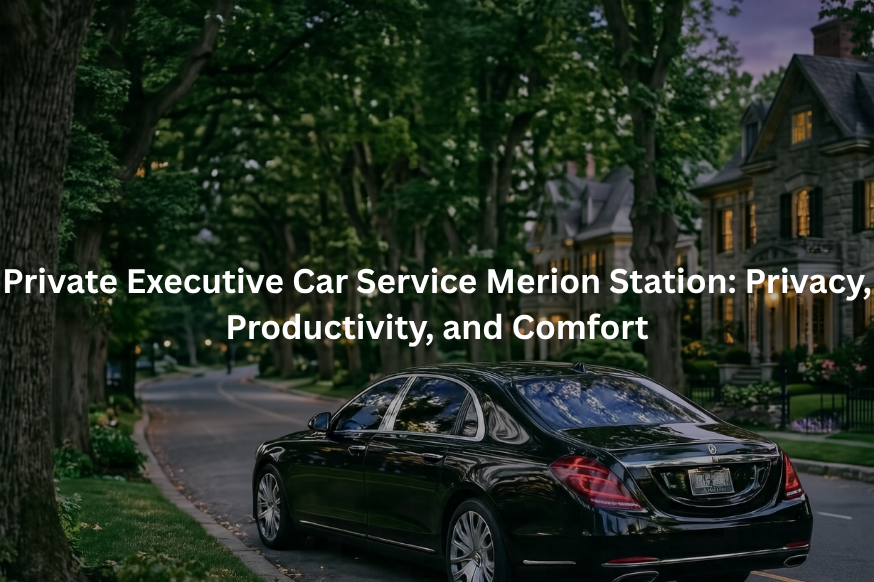
Executive sedans (Mercedes-Benz E-Class, Cadillac CT6, BMW 5 Series) are the standard vehicle for individual executive transfers, VIP airport arrivals, and situations where discretion and professionalism are the primary requirements. They’re appropriate for one to three passengers with standard luggage.
For corporate events where senior guests are arriving individually, a fleet of executive sedans coordinated through a single provider creates consistency without requiring oversized vehicles for solo travelers.
Luxury SUVs
Luxury SUVs (Cadillac Escalade ESV, Mercedes-Benz GLS, Lincoln Navigator) bridge the gap between the intimacy of a sedan and the capacity of a larger vehicle. They accommodate four to six passengers comfortably with luggage, handle Philadelphia’s variable road conditions well, and project the appropriate level of professionalism for corporate hospitality.
For corporate groups, family travel, and events where several guests share a vehicle, the SUV is frequently the most versatile option. It provides premium comfort without the logistical considerations of a larger vehicle in urban environments.
Mercedes-Benz Sprinter Vans
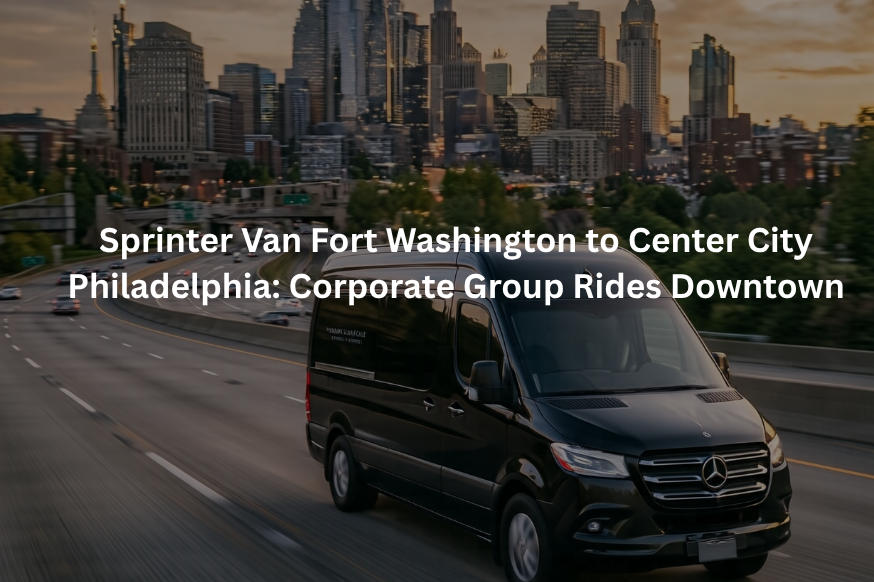
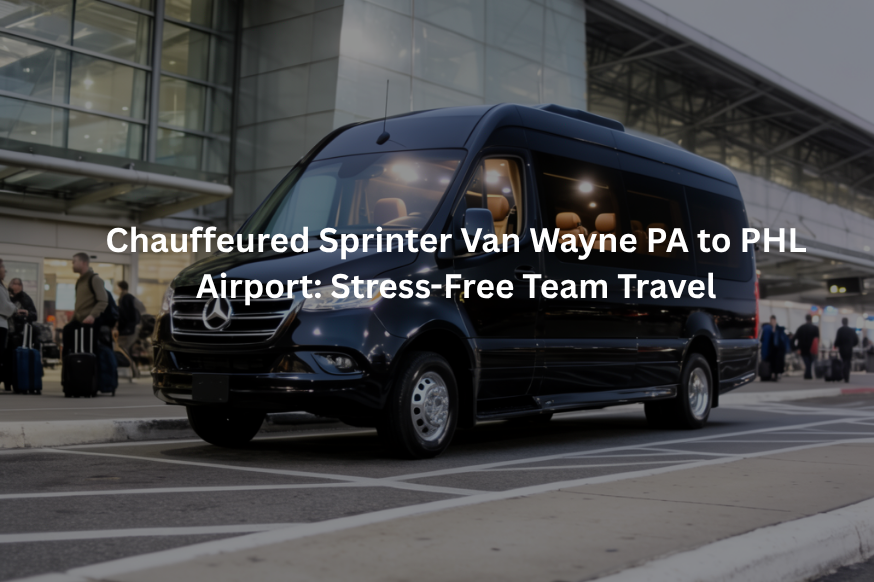
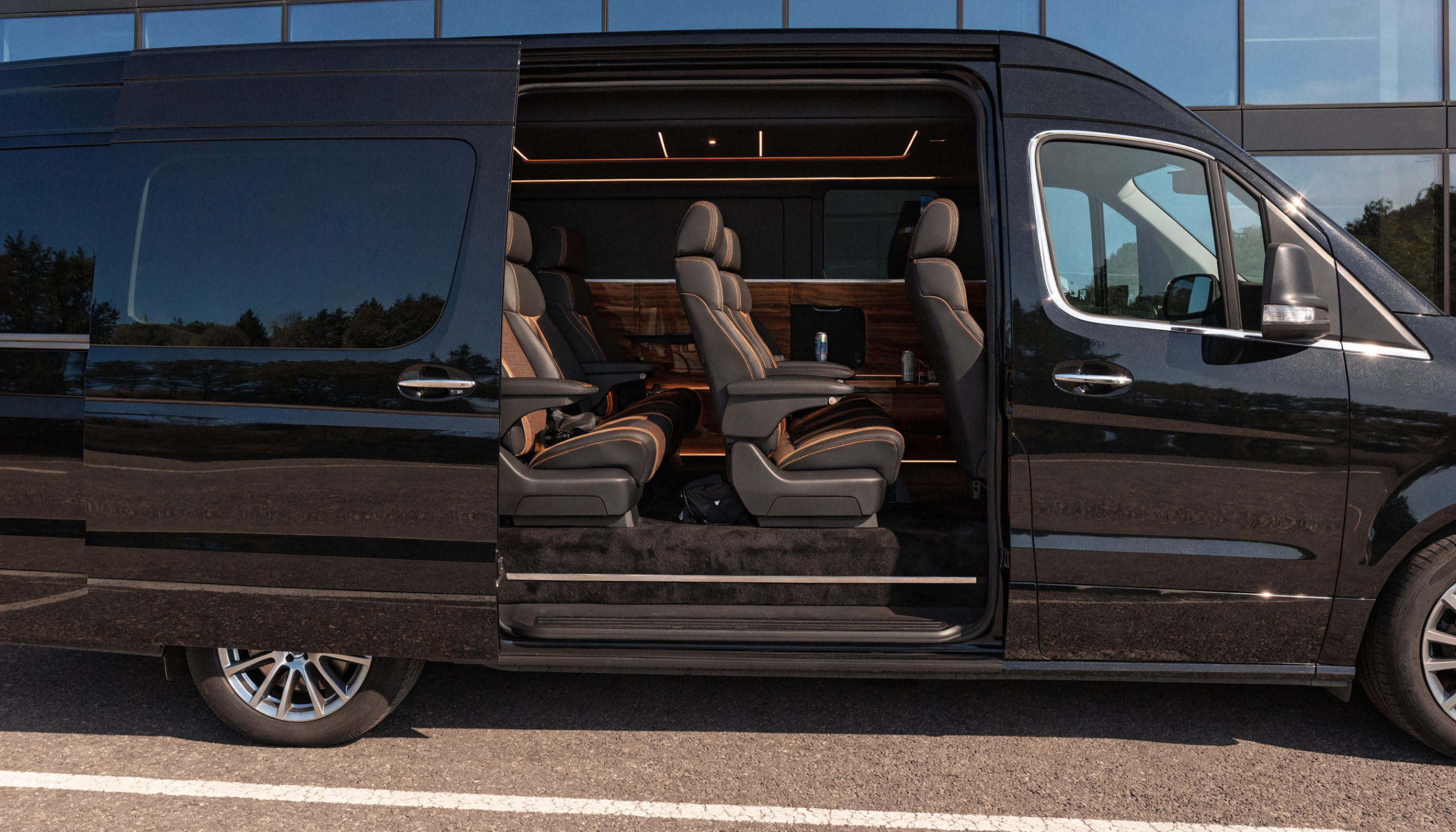
Sprinter vans configured for passenger transport accommodate 10 to 14 travelers and represent a significant step up from SUVs for group coordination. They’re particularly well-suited for conference shuttle runs between hotels and event venues, group airport arrivals when attendees share a flight or arrive in the same window, and team transportation for corporate outings.
The Sprinter’s cabin can be configured with forward-facing seating, luggage storage, and climate zones that make a 45-minute airport ride comfortable rather than cramped.
Stretch Limousines and Limo SUVs
Stretch configurations (traditional stretch limos, stretch Escalades or Hummer-style vehicles) carry 8 to 14 passengers in a single enclosed environment designed for the journey itself to be part of the experience. These are well-suited for wedding transportation, milestone celebrations, prom events, and situations where the vehicle contributes to the occasion rather than simply moving people between locations.
For custom event programs, stretch vehicles are most effective when the group wants to arrive together in a way that makes a visual and experiential statement.
Coach and Minibus Options
For larger groups, corporate events with 30 or more attendees, or multi-day conference programs that require consistent shuttle service, motor coaches and minibuses provide capacity with comfort. These vehicles work well for conference transportation programs, convention center shuttle routes, and incentive travel programs where a group needs to move together across multiple destinations.
Custom Transportation for Corporate Events: What the Planning Actually Looks Like
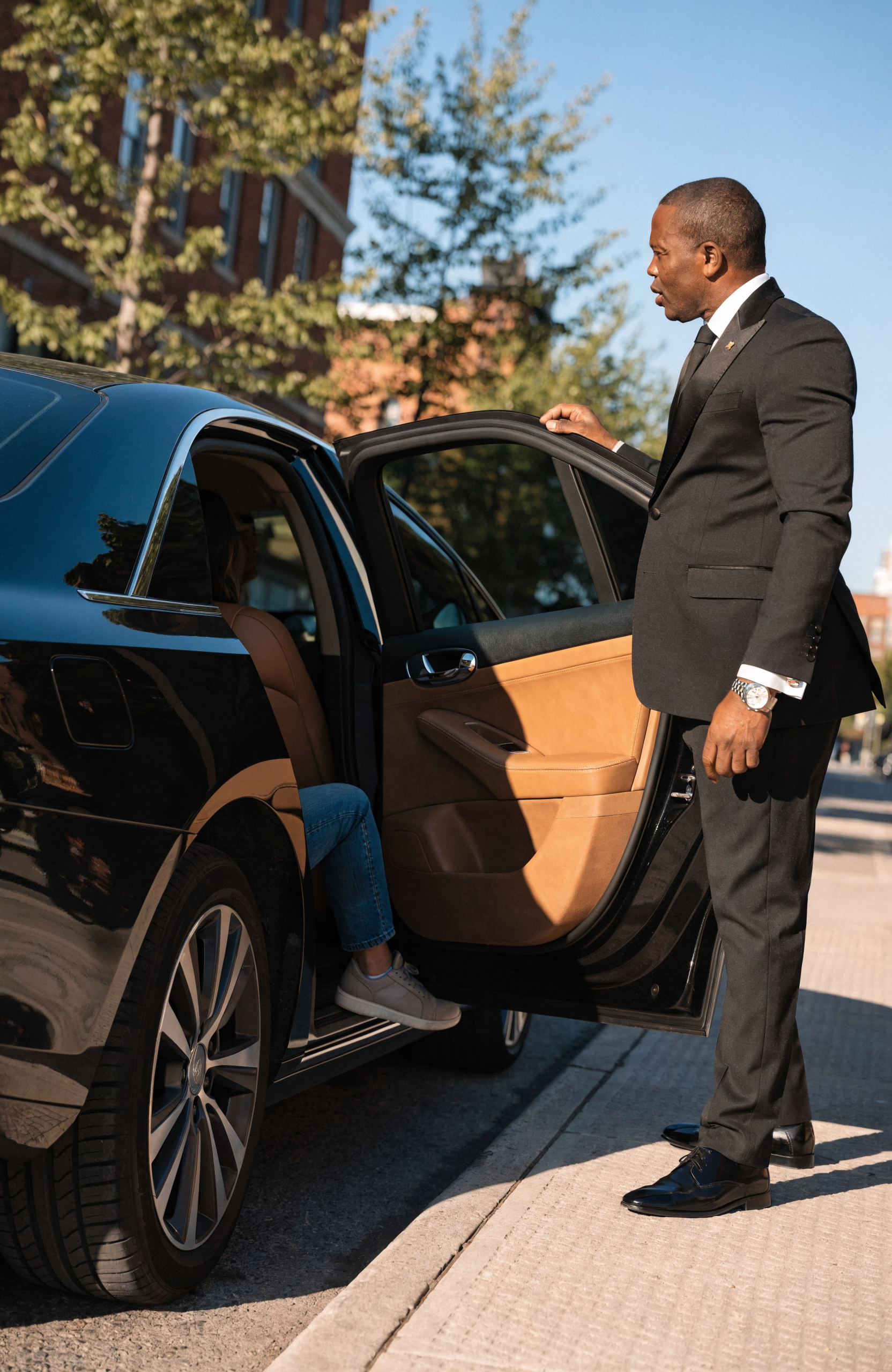
Corporate events present some of the most complex ground transportation requirements of any occasion. A conference at the Pennsylvania Convention Center in Philadelphia, for example, involves arrivals staggered across two days, hotel pickups from multiple properties across Center City and University City, and an evening program that requires transportation from the convention center to a dinner venue and return.
A thoughtful custom transportation program for this event would work through several specific decisions.
Airport arrival coordination. Which flights are bringing the majority of attendees? Is a dedicated meet-and-greet at PHL appropriate for VIP arrivals? Should a Sprinter van be staged at PHL for attendees arriving on the same flight, or should individual sedans be dispatched based on arrival times? These decisions are made upfront, not managed reactively on the arrival day.
Hotel routing. If attendees are distributed across three hotels, the shuttle route between hotels and the convention center needs to account for pickup timing, traffic patterns on Broad Street and Market Street during morning rush hours, and return schedules at the end of each program day.
Evening event transfers. If the conference dinner is at a private venue outside the convention center, transportation from the venue to hotels after the event needs to be planned. Late-night Philadelphia streets have specific traffic patterns, and Center City exit routes at 10:30 PM on a Thursday require different planning than a midday transfer.
VIP coordination. Senior executives, keynote speakers, or sponsor guests often require dedicated vehicles and drivers separate from the general attendee shuttle program. Coordinating these alongside the broader fleet requires clear communication and a provider capable of managing both simultaneously.
Delux Limousines builds custom programs for corporate events in the Philadelphia area specifically, with familiarity of the Convention Center’s loading zones, the major hotel corridors, and the traffic patterns that affect different neighborhoods at different times of day. Detailed discussions start at dltsl.com/contact-us.
Custom Transportation for Weddings and Special Occasions
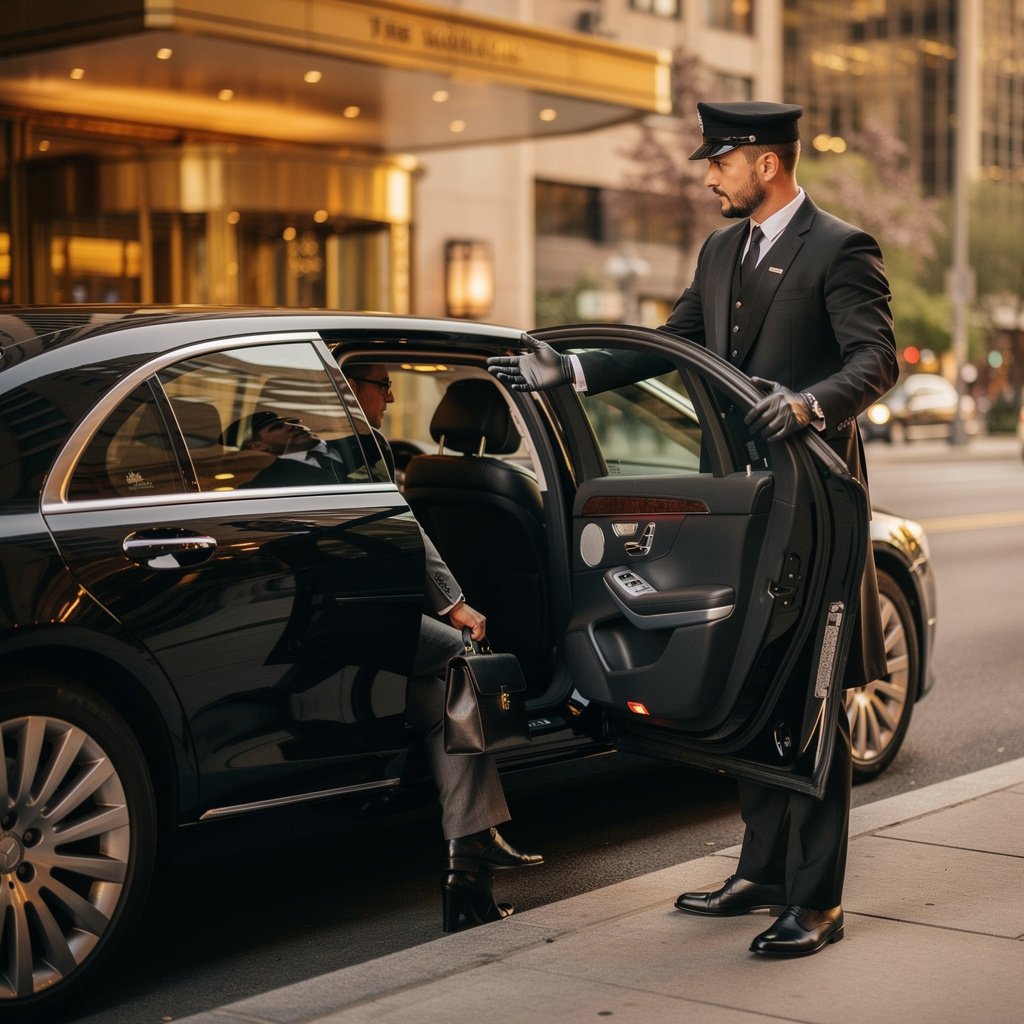
Wedding transportation sits in a category of its own because the logistics involve multiple parties, multiple locations, and a timeline where delays compound quickly.
A complete wedding transportation program might involve:
- Morning pickup of the bridal party from a hotel or residence to the ceremony venue
- Separate transport for immediate family members
- Post-ceremony transfer of the wedding couple to the reception venue
- Shuttle service for guests between a hotel block and the reception
- Late-night return shuttle from the reception to the hotel
Each of these legs involves different vehicles, different passenger configurations, and different timing requirements. Planning them as a single coordinated program ensures they work together rather than creating conflicts where multiple vehicles are needed at the same location simultaneously.
For Philadelphia-area weddings, venues like the Crystal Tea Room, the Hyatt Centric, Spring Arts, and Tendenza each have specific vehicle access, loading zone locations, and parking constraints that a local transportation provider navigates more efficiently than one unfamiliar with the city.
Custom wedding transportation programs from Delux Limousines are structured around the full day’s timeline rather than individual trips, which creates a coordinated experience for the bridal party without the stress of managing each leg separately.
VIP and High-Profile Group Transportation
Some transportation programs require an additional level of coordination that goes beyond standard corporate or event logistics. Government delegations, entertainment industry clients, high-profile corporate visitors, and individuals with specific security or privacy requirements benefit from a provider who understands discretion as a professional standard rather than an afterthought.
Key elements of VIP transportation programs:
Named and consistent drivers. For multi-day programs, the same driver on each day builds familiarity and trust with the principal or their security detail. Inconsistency in the driver pool creates unnecessary variables.
Advance route review. For high-profile arrivals, drivers should know the route in advance, including alternative routes if the primary is blocked. Philadelphia’s Center City grid and the I-95/I-76 corridors have well-known congestion points. An experienced driver who knows which blocks around Broad Street back up during evening events provides a level of reliability that reactive GPS navigation doesn’t.
Direct communication lines. VIP programs require the ability to reach the provider directly when plans change, not through an app interface. Direct phone and WhatsApp access to the dispatching team is standard practice for custom transportation providers handling high-priority clients.
Appropriate vehicle selection. The vehicle should match the principal’s preferences and the occasion’s requirements without being either ostentatious or inadequate. An SUV with privacy glass and a clean interior is often the right choice for low-profile executive movement; a more formal vehicle may be appropriate for ceremonial or prestige occasions.
Multi-Day and Multi-Destination Programs
Some of the most complex custom transportation needs arise when the itinerary spans multiple days or multiple destinations within the same trip.
A corporate incentive program that begins with airport arrivals, includes a day trip to a venue outside the city, follows with a gala dinner on day two, and ends with staggered airport departures on day three requires planning that treats the full program as a connected logistics challenge rather than a series of individual bookings.
For Philadelphia-area programs that extend to nearby destinations, Valley Forge, the Brandywine Valley, Atlantic City, or the Jersey Shore, the coordination requirements include inter-city routing, timing around attraction opening and closing hours, and return schedules that align with dinner reservations or hotel check-in windows.
Multi-day programs benefit significantly from a single provider managing the entire scope. Splitting a multi-day program across multiple vendors introduces communication failures, inconsistent driver quality, and the coordination friction of managing multiple confirmation systems.
What to Communicate When Requesting a Custom Program
The quality of a custom transportation plan depends significantly on the information the provider receives upfront. Here’s what to have ready when making the initial request.
Number of passengers and group structure. Total headcount, whether the group travels together or in separate parties, and whether VIP or sub-group designations apply.
Full event timeline. Not just departure and arrival times, but the complete schedule from first pickup to last drop-off, including any flexibility windows or hard deadlines.
Vehicle preferences and requirements. Any specific vehicle requirements, accessibility needs, child seat requirements, or comfort preferences that affect which vehicles are appropriate.
Pickup and drop-off locations. All locations involved, with any specific access instructions (loading zone restrictions, security checkpoints, private entrances) noted in advance.
Special requests. Specific amenities, signage for meet-and-greet service, particular music preferences, privacy requirements, or communication protocols for the day of service.
Budget context. For larger programs, having a general budget range helps the provider structure a program that delivers the best outcome within realistic parameters rather than proposing a program that needs to be significantly revised.
Building a Program That Actually Works
Custom transportation solutions succeed when the planning phase is treated with the same attention as the event itself. Transportation that fails because of poor coordination doesn’t get a second chance: it affects the attendee or guest’s entire experience of the event, the meeting, or the occasion.
The questions that matter in the planning phase:
- Have all vehicle needs been matched to specific legs of the itinerary?
- Are pickup and drop-off locations confirmed and accessible?
- Does the driver have everything needed for any leg that involves a VIP or high-priority guest?
- Are communication protocols established for real-time adjustments?
- Has the timeline been reviewed for potential conflicts (two vehicles needed at the same location simultaneously)?
- Are extension protocols in place if the event runs long?
A provider who asks these questions before the event is better positioned to deliver without surprises than one who awaits instructions on the day.
Quick Reference: Matching Vehicle to Need
| Situation | Recommended Vehicle | Notes |
|---|---|---|
| Solo executive transfer | Executive sedan | Clean, quiet, professional |
| Small group (3-6) | Luxury SUV | Versatile, urban-friendly |
| Conference shuttle (10-14) | Sprinter van | Coordinated group movement |
| Wedding party (8-14) | Stretch limo or SUV stretch | Experience-focused |
| Large corporate group (20+) | Coach or multiple vehicles | Coordinated fleet dispatch |
| VIP or high-profile guest | Luxury sedan or SUV | Consistency, discretion |
The Role of Local Knowledge in Custom Program Success
Custom transportation programs work best when the provider knows the environment where they’re operating. For Philadelphia-area programs, this means understanding the Pennsylvania Convention Center’s vehicle loading procedures, the hotel drop-off configurations along Market Street and Broad Street, the traffic behavior around Citizens Bank Park during game season, and the specific exit dynamics at popular event venues in Old City, Fishtown, and Center City.
This local familiarity doesn’t show up in a proposal, but it shows up in execution. A driver who has navigated the Convention Center’s loading dock during a busy conference day handles it differently than one who is reading the venue’s printed instructions for the first time.
Delux Limousines has provided custom transportation solutions for corporate events, special occasions, and multi-day programs throughout the Philadelphia region. The team brings that local knowledge into every program design. Full service information is available at dltsl.com/services.
Getting Your Custom Program Started
Transportation planning for complex events and itineraries rewards early engagement. For programs involving multiple vehicles, multi-day coordination, or large guest counts, the lead time needed to confirm vehicles, assign drivers, and finalize logistics is typically two to four weeks for standard events and four to eight weeks for large conferences or high-profile programs.
The starting point is a direct conversation about what the trip or event actually requires. From that conversation, a custom plan takes shape.
Reach the Delux Limousines team to discuss your program’s specific needs and receive a detailed proposal tailored to your itinerary at dltsl.com/contact-us. Client reviews from the Philadelphia region are available on Yelp.
Call: 610-871-8784
WhatsApp: 267-988-3392
Email: reservations@dltsl.com