The Parking Problem Nobody Plans For Until It’s Too Late
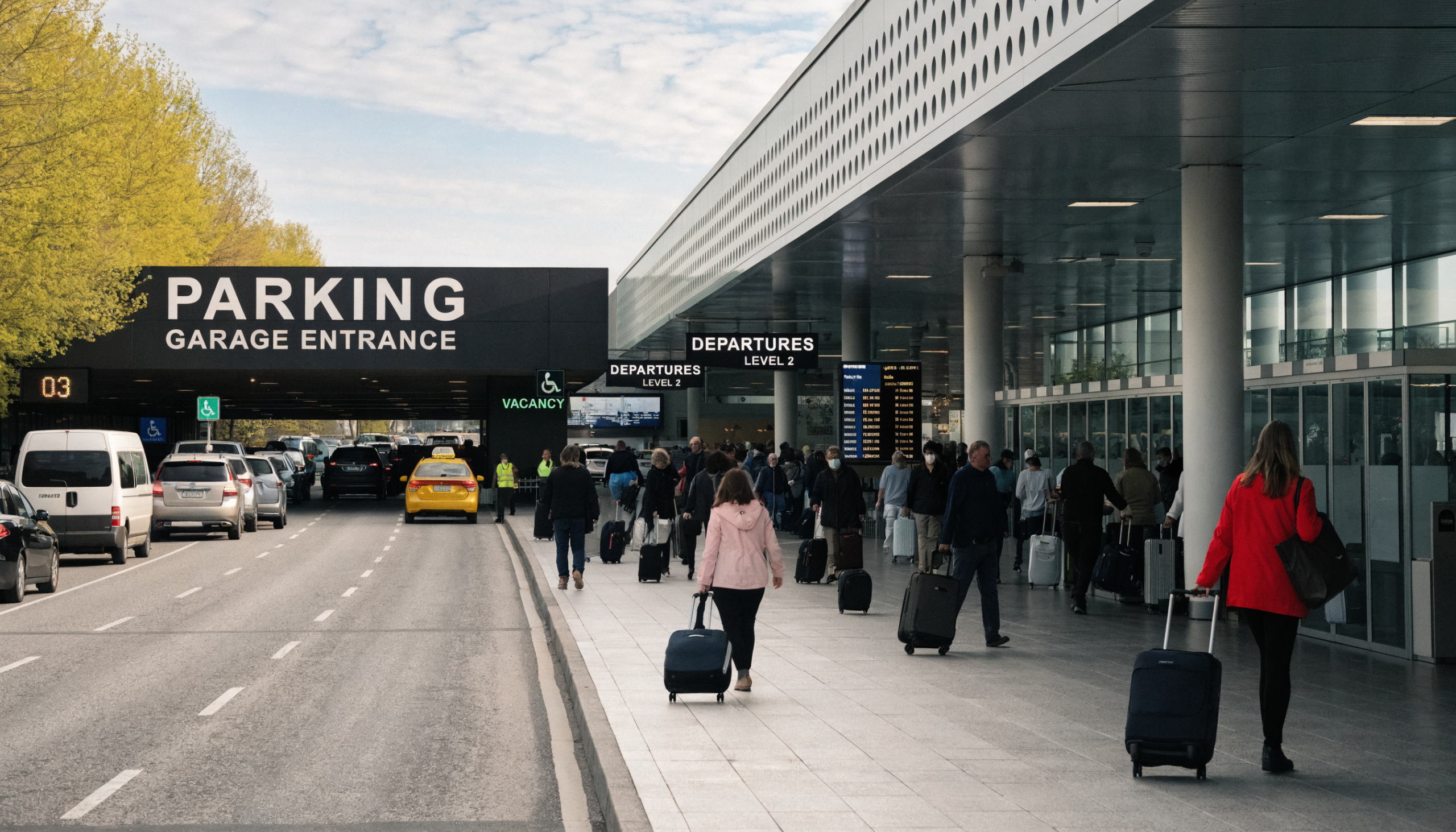
Spring travel has a way of catching people off guard. The flight is booked, the hotel is confirmed, and the itinerary looks solid. Then comes the airport, and with it the discovery that every parking lot within a reasonable distance is full, the shuttle line is thirty people deep, and the off-site facility that looked affordable online requires a twenty-minute van ride with three other families and a cart full of luggage.
This plays out across the United States every year from mid-March through late April. Spring break travel windows and early-season getaways push airport parking facilities, beach town garages, and hotel lots to capacity simultaneously. The difference between a smooth departure and a stressful one often comes down to whether parking was part of the plan or an afterthought.
This spring travel parking guide covers what actually works in 2026, from airport strategies and road trip logistics to the point where skipping the car entirely becomes the smarter call.
Why Spring Parking Is a Different Problem Than Any Other Season
Summer travel is heavier in total volume. Holiday travel is more compressed. But spring break creates a specific combination of factors that makes parking genuinely difficult in ways that catch even experienced travelers unprepared.
Demand spikes are concentrated and predictable. Late March through the first two weeks of April is when most K-12 school districts, colleges, and universities schedule spring breaks. Everyone moves at roughly the same time, which means airport parking facilities, beach town lots, and resort parking structures all hit capacity within the same two-to-three week window.
Off-site lots fill before on-site ones. Most travelers assume off-site airport parking is the fallback when the main lots are full. During spring break, the off-site facilities in popular departure cities (Philadelphia, New York, Dallas, Atlanta, Denver) fill days or sometimes weeks ahead of the peak dates. If you’re planning to book an off-site lot the week before you leave for a late-March trip, you may already be behind.
Shuttle queues extend wait times significantly. Even when a parking spot is available, the shuttle ride to the terminal during peak spring travel can add 25 to 45 minutes to your airport arrival timeline. Airports like Philadelphia International (PHL), where economy lots are positioned away from the main terminal complex, require shuttle coordination that works smoothly on a Tuesday in February and backs up badly during spring break.
Hotel parking becomes an expense, not an amenity. In beach towns, resort areas, and city hotels during spring travel season, parking is frequently capped, charged separately, or simply unavailable without a reservation. Many travelers budget carefully for flights and accommodation and discover the parking fee at check-in.
Airport Parking in 2026: What the Options Actually Look Like
For most domestic spring trips, the airport is where the parking decision matters most. Here’s how the main options compare during peak spring travel.
| Parking Type | Typical Cost Range | Pros | Cons |
|---|---|---|---|
| On-site short-term | $30-$60/day | Close to terminal | Fills fastest, highest cost |
| On-site long-term/economy | $15-$30/day | Lower cost, shuttle available | Shuttle wait times increase during peak |
| Off-site with shuttle | $8-$20/day | Most affordable | Books out early, longer commute |
| Valet parking | $40-$80/day | Fastest terminal access | Premium pricing, limited availability |
| Pre-booked car service | Fixed rate | No parking needed, door-to-door | Higher upfront cost than economy lots |
The honest assessment: during spring break travel, the cost difference between economy parking and off-site parking narrows once you factor in shuttle time, fuel to the lot, and the unpredictability of availability. For a family of four traveling for seven to ten days, the math becomes interesting when you compare long-term parking totals against a pre-arranged car service that handles pickup and drop-off directly at your door.
How Far Ahead Should You Book Spring Travel Parking?
The window that applies here is longer than most people expect.
For travel dates falling between March 20 and April 15 (the peak of spring break season in most U.S. school calendars), booking airport parking three weeks in advance is a reasonable minimum. For popular departure cities and airports that regularly experience spring break congestion (Philadelphia, Orlando, Miami, Denver, Dallas), a month ahead is safer.
Off-site lots tend to post availability online, so checking two to three times a week starting in early February for late March travel gives you a realistic picture of how fast spots are moving.
For beach destinations with limited parking infrastructure, such as barrier island towns, coastal resort areas, or national park gateways, available parking may not exist in the traditional sense. Many of these areas manage crowds through paid lot systems that reach capacity by mid-morning on peak weekends. Arriving before 9 AM or using designated shuttle systems from satellite lots is often the only workable option.
Road Trip Parking: The Spring Break Scenarios That Require a Plan
Airport parking gets most of the attention in spring travel guides, but road trips create their own set of parking challenges.
Beach destinations with limited street access. Many Atlantic and Gulf Coast beach towns restrict street parking to residents during spring break season. Paid lots exist but fill quickly. For popular spots along the Delaware shore (Rehoboth Beach, Dewey Beach) or down the Jersey Shore, arriving before 10 AM on weekend days during spring break is the difference between parking easily and circling for forty-five minutes.
Urban destinations for city-based spring breaks. Cities like Philadelphia, Washington D.C., New York, and Chicago are popular spring break destinations for families who prefer museums, history, and food over beach crowds. Downtown parking in these cities is expensive year-round and more competitive during tourist peaks. Daily garage rates in Center City Philadelphia can run $25 to $45. Many families find that staying at a hotel outside the core and using transit or car service into the center city for the day is both more affordable and less stressful than moving the car between downtown destinations.
National parks and outdoor destinations. The National Park Service has increasingly moved toward timed-entry reservation systems for high-demand parks during peak seasons. Parking at trail heads in parks like Great Smoky Mountains, Shenandoah, and Acadia fills before 9 AM on spring weekends. Arriving at park opening or using park shuttle systems where available is not optional advice but a practical requirement.
University Parking During Spring Break: A Note for Students and Parents
College campuses handle spring break in ways that regularly surprise both students and visiting parents. Many universities activate modified parking rules during break weeks: certain lots are closed for maintenance, others are reassigned for events, and visitor parking becomes more restricted than during the regular academic calendar.
Students leaving vehicles on campus for spring break should check institutional parking guidance before departing. Some universities require cars to be moved to designated garages during break weeks, with vehicles left in prohibited lots subject to ticketing or towing.
Parents visiting campuses during spring break for move-out assistance or campus tours should confirm visitor parking availability through the university’s transportation or parking office directly, not through general campus maps that may not reflect seasonal changes.
When Skipping the Car Is the Smarter Decision
There’s a point in spring travel planning where the parking math, the shuttle wait, the fuel cost, and the stress of finding a space on arrival all point in the same direction: just don’t drive.
This calculus comes up most clearly in three situations.
Fly-and-arrive trips where airport parking extends beyond five days. At most major airports, parking beyond five days at an economy lot starts to approach the cost of a round-trip car service. For a week-long spring break trip departing from the Philadelphia area, the economy lot total plus shuttle time plus the convenience gap adds up against a pre-booked sedan service that picks you up at your door and drops you at departures.
Multi-stop spring itineraries in dense cities. If your spring trip involves multiple days in a city like Philadelphia, Boston, or Chicago with no need for a car once you arrive, then driving to the airport and paying for long-term parking is paying for a car you won’t use. Regional trains, car services, and ride-share handle in-city movement more efficiently than a rented or personal vehicle in most downtown environments.
Group travel where coordination matters. For families or groups traveling together, splitting into multiple vehicles creates coordination friction at every step: departure timing, parking lot meeting points, shuttle coordination, and the inevitable moment where one vehicle loses the group in post-arrival traffic. A single group vehicle, whether a large SUV or a limo bus, keeps everyone together from home to terminal.
Philadelphia Spring Travel: What to Know Before You Leave
For travelers departing from the Philadelphia region, a few specific points are worth noting for spring 2026.
Philadelphia International Airport (PHL) is experiencing sustained growth in spring travel bookings, particularly for Caribbean, Florida, and European routes popular during spring break. The economy parking lots at PHL (Economy A and B, accessible via shuttle from Terminal A-West and Terminal F areas) fill reliably during peak spring travel weeks. Booking through the PHL official parking portal at least two weeks ahead is advisable.
Travelers heading to Shore destinations (Rehoboth Beach, Ocean City, or the Jersey Shore) by car should anticipate Route 1 and the Garden State Parkway moving slowly on Friday afternoons throughout March and April. Saturday morning departures, before 8 AM, offer materially better travel times.
For groups traveling together from the Philadelphia area to PHL or to Shore destinations, Delux Limousines provides group vehicle options that accommodate families and travel parties from a single pickup point. The chauffeur handles the drive; the group arrives together without the parking coordination. Services and vehicle options are listed at dltsl.com/services.
Safety Considerations for Spring Travel Parking
Practical safety points worth including in any spring travel parking plan.
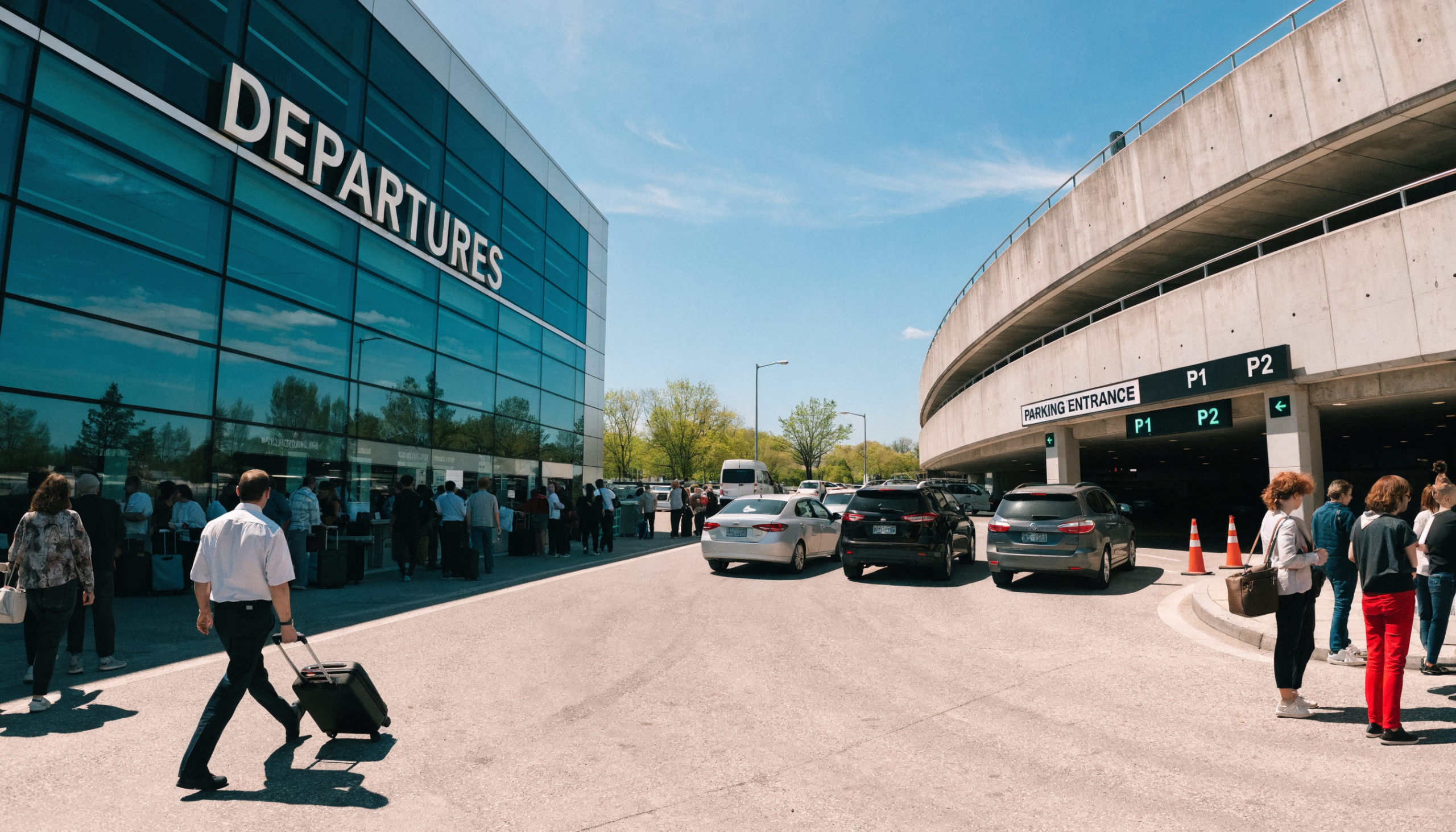
Long-term airport parking security. Well-lit, staffed lots managed by the airport or a recognized provider are preferable to unmonitored street lots near airports. Many cities have informal lots that appear in search results but lack fencing, security cameras, or consistent staffing. Reviews on platforms like Google Maps or the Better Business Bureau are worth checking before booking an unfamiliar off-site facility.
Valuables in parked vehicles. During a week-long spring break trip, your vehicle sits in one place for an extended period. Remove or secure anything of value before leaving. Electronics, bags visible through windows, and items left in obvious storage areas are the most common targets in long-term lots.
Note your parking location carefully. This is a simple point that causes genuine problems. Large airport economy lots and stadium-area garages look identical on every level. Photo your parking spot, section letter, and level number before you walk to the shuttle. After a long return trip, this detail is easy to forget and wastes significant time.
Shuttle timing at night. If your return flight lands late, confirm that your parking facility’s shuttle service runs at that hour. Some off-site lots operate limited late-night schedules. This is worth confirming before you book, not when you’re standing outside baggage claim at 11:30 PM.
The Honest Bottom Line on Spring Travel Parking
A good spring travel parking guide doesn’t just tell you where to park. It helps you decide whether parking is the right choice for your specific trip.
For some spring travelers, pre-booking a long-term airport spot three weeks out and arriving with extra shuttle time built in is the right call. It’s affordable, familiar, and requires minimal planning beyond the initial reservation.
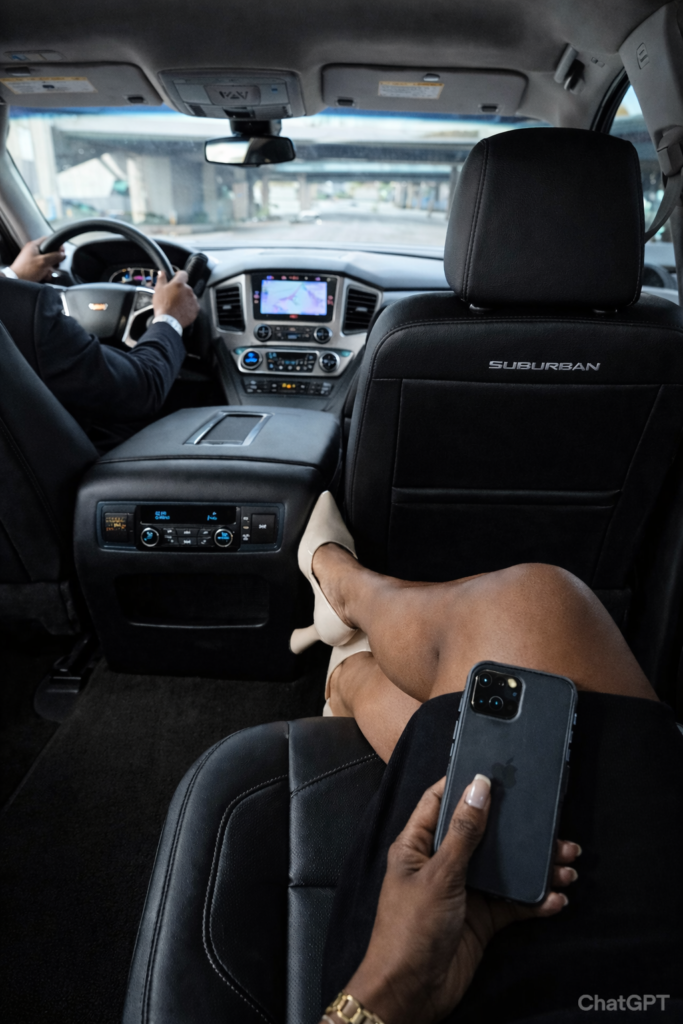
For others, particularly those traveling with families, groups, or anyone prioritizing a calm departure over a budget minimum, the calculation runs differently. A professional car service that handles pickup at home, drop-off at departures, and arrival pickup after the return flight removes the parking variable entirely. The morning of a spring break departure, especially with kids and luggage involved, is not the time to discover the shuttle is running thirty minutes behind.
Delux Limousines provides airport car service from the Philadelphia region to PHL, EWR, JFK, and other regional airports for spring travel and beyond. The booking process is straightforward, pricing is confirmed upfront, and the vehicle arrives when and where it’s scheduled. For groups or families where coordination matters, it’s a practical alternative worth comparing against the full cost of long-term parking.
Reach the team at dltsl.com/contact-us to discuss your spring travel dates and vehicle options. Client reviews are available on Yelp.
Call: 610-871-8784
WhatsApp: 267-988-3392
Email: reservations@dltsl.com