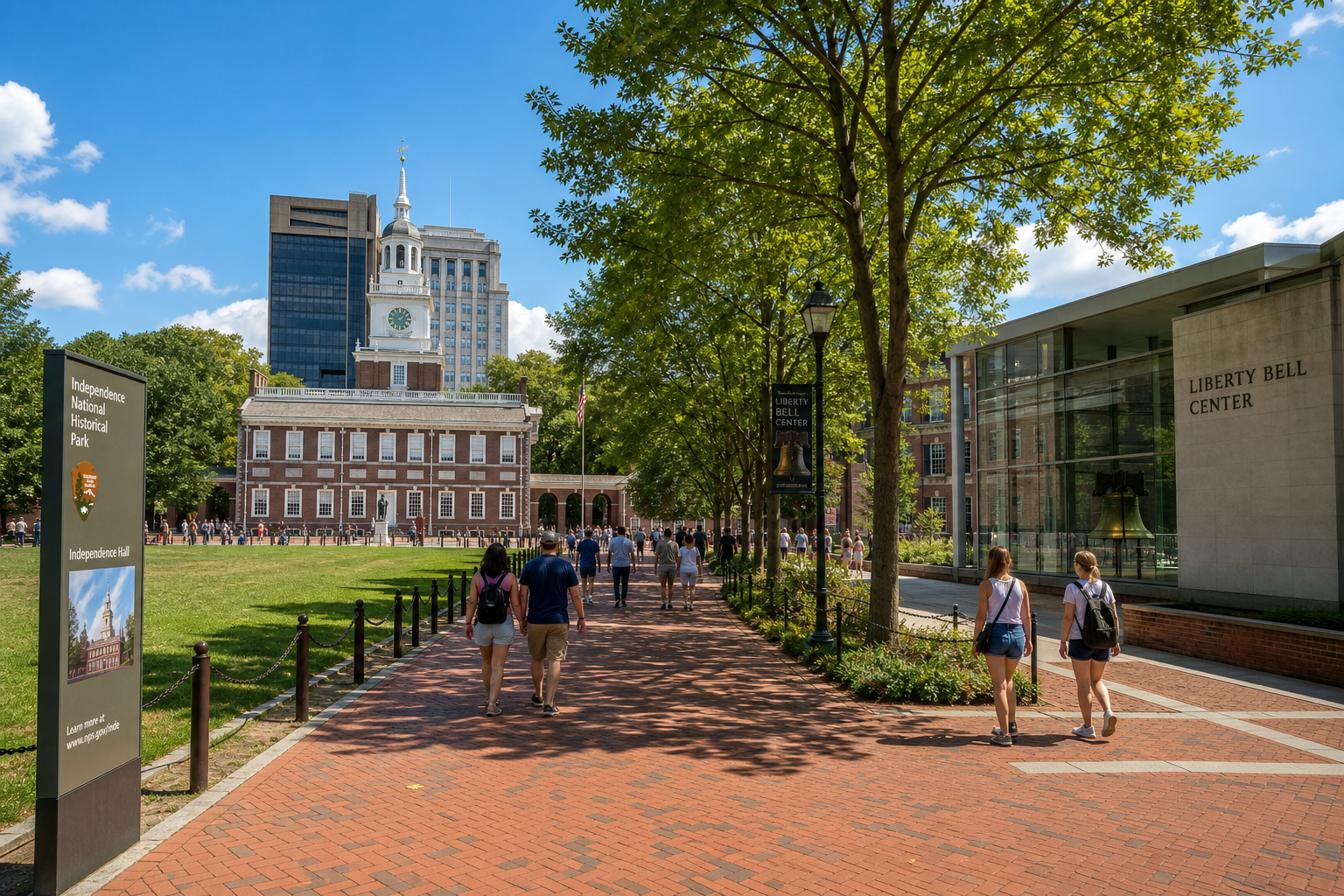
Philadelphia holds a unique position in American history. No other city in the United States concentrates so many founding-era sites, colonial-period streets, and nationally significant buildings within such a compact and walkable area. The top historic landmarks to visit in Philadelphia form a continuous narrative of the American story, from the debates that produced the Declaration of Independence to the cobblestone streets where ordinary citizens lived and worked during the revolutionary era.
For tourists arriving from out of town, history enthusiasts planning a dedicated research trip, school groups on educational visits, and families looking for a sightseeing day that holds everyone’s interest, Philadelphia’s historic district offers more per square mile than almost any other destination in the country. This guide covers the essential landmarks, practical planning details, ticket requirements, accessibility information, and a structured itinerary approach that helps any visitor experience the city’s history in comfort and with purpose.
Before You Go: Essential Planning Information
A well-organized visit to the top historic landmarks to visit in Philadelphia starts with a few minutes of preparation. The information below answers the most common questions visitors ask before arriving at the historic district.
Best time to visit avoiding crowds: Early morning on weekdays provides the lowest visitor volume at all major sites. Thursday and Friday mornings before 10:00am are consistently less crowded than weekend visits. April, May, September, and October bring the largest number of visitors to the city. Summer weekends, particularly Saturday, are the busiest periods.
How long for a full historic district walking tour: A comprehensive visit covering all major sites requires three to five hours. A focused tour visiting only the top five landmarks can be completed in two to three hours. Adding Eastern State Penitentiary or Philadelphia City Hall to the itinerary extends the day to six or more hours.
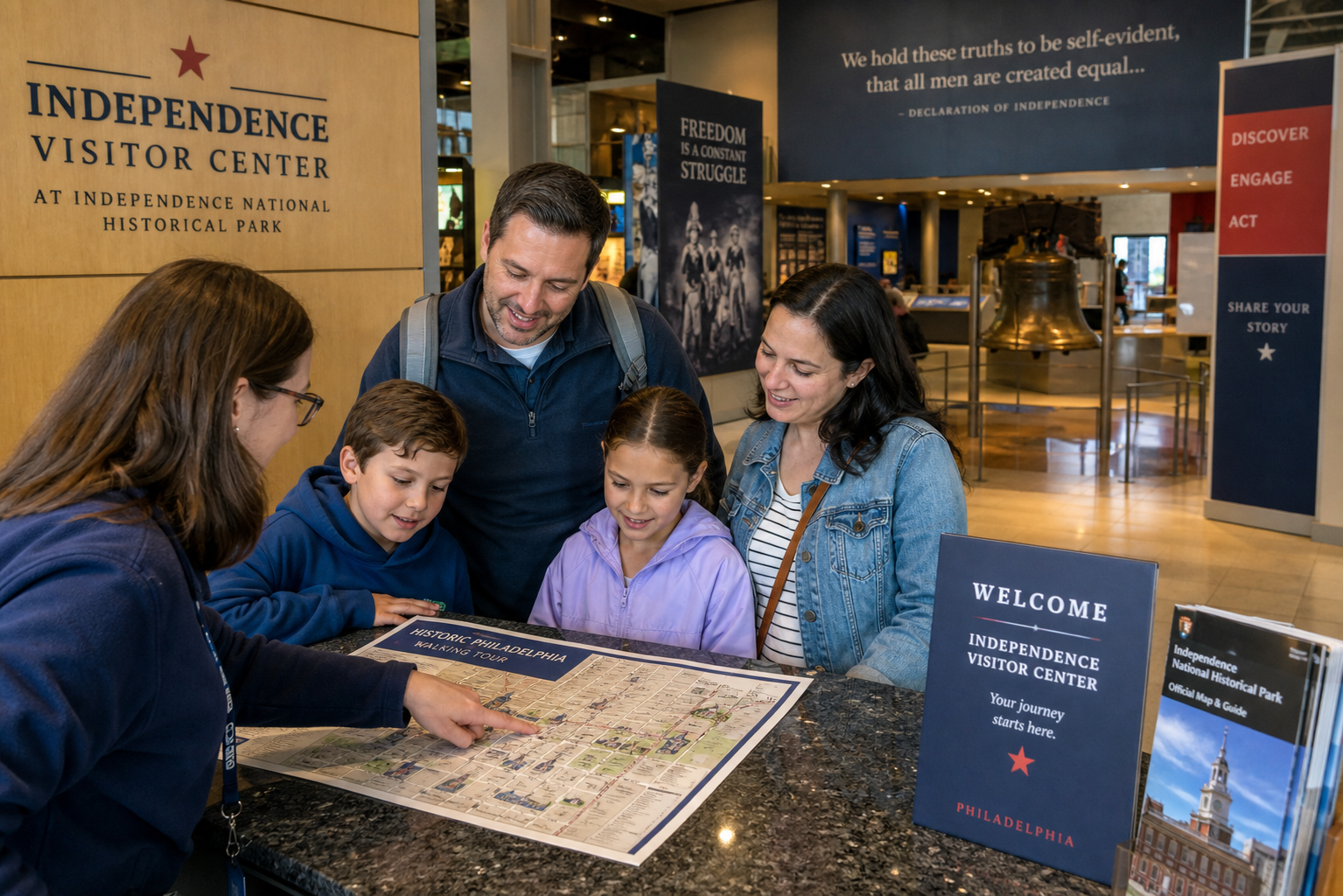
Where to find free historic walking maps: The Independence Visitor Center distributes complimentary printed walking maps covering every major landmark in the Old City historic district. Digital maps are available through the National Park Service website and the VisitPhilly.com portal.
Nearby parking for Old City landmarks: Paid parking garages in the Old City and Society Hill neighborhoods charge approximately $20 to $30 per day. Street parking is metered during business hours and limited in availability during peak visitor seasons. For visitors who prefer to eliminate parking logistics entirely, a professional car service with a dedicated chauffeur and door-to-door transfers is the most practical alternative.
Are combo tickets available: Yes. Multi-site combo packages combining admission to several paid attractions are available at prices generally ranging from $25 to $40. These packages are sold through the Independence Visitor Center and individual attraction websites.
Do sites offer accessibility for wheelchairs: The majority of Philadelphia’s major historic sites offer accessible entrances, ramps, and elevator access. The National Park Service maintains detailed accessibility information for all Independence National Historical Park sites. Some historic structures, including the Betsy Ross House, have limited accessibility due to the nature of 18th-century residential architecture.
Can kids enjoy Philadelphia historic landmarks: Yes, fully. Interactive exhibits at the National Constitution Center, the audio tour at Eastern State Penitentiary, costumed interpreters at the Betsy Ross House, and junior ranger programs at Independence National Historical Park all engage younger visitors in age-appropriate ways.
The Complete Guide: Top Historic Landmarks to Visit in Philadelphia
The following landmarks represent the core of Philadelphia’s historic district, presented in a logical visiting order that minimizes walking time and maximizes the coherence of the historical narrative.
1. Independence Visitor Center
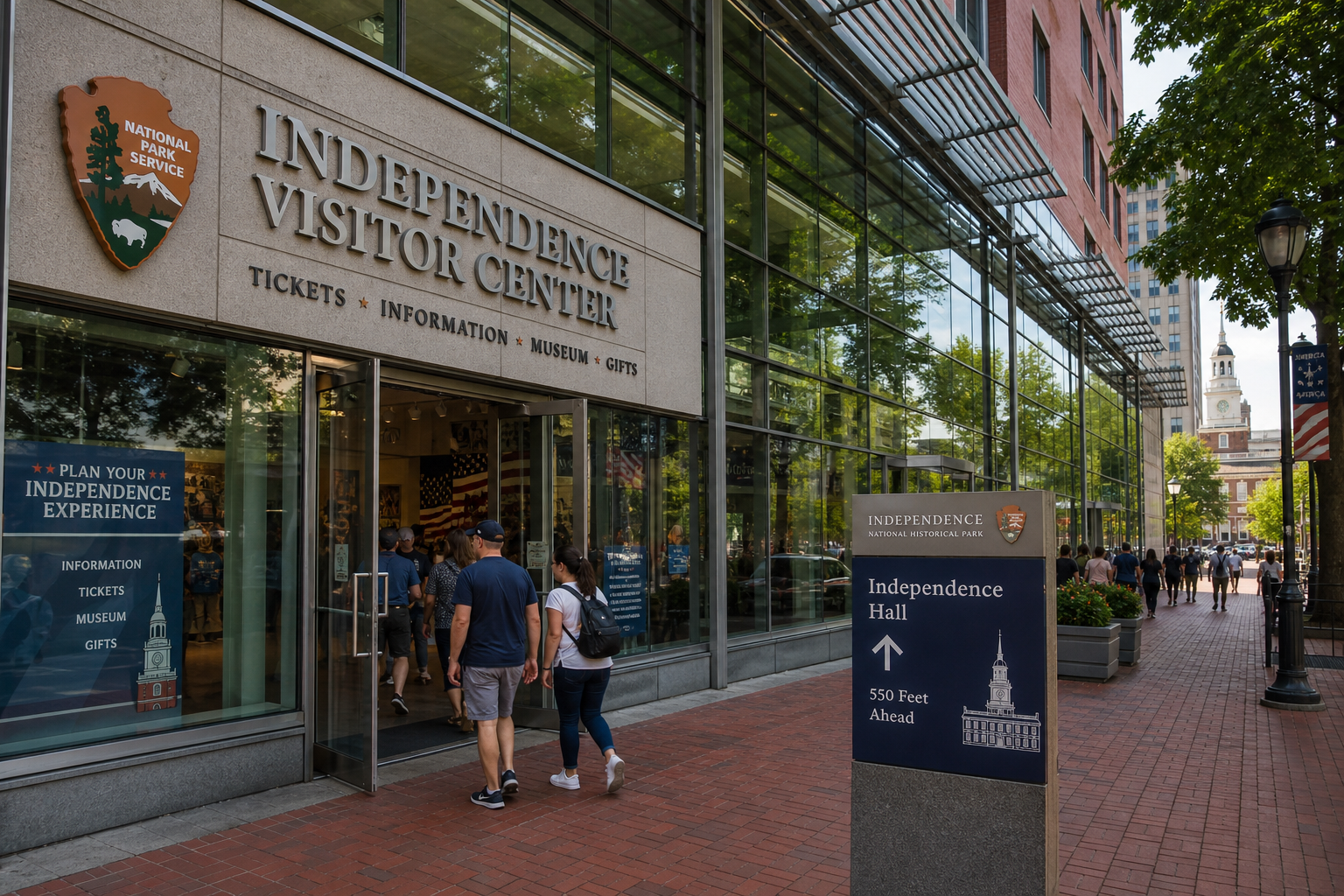
Start every visit here. The Independence Visitor Center, located on Market Street at Sixth Street, is the official welcome point for all visits to Independence National Historical Park and the broader historic district.
| Detail | Information |
|---|---|
| Hours | Daily, typically 8:30am to 5:00pm (extended in summer) |
| Cost | Free |
| Services | Maps, tickets, ranger information, restrooms, exhibit gallery |
| Accessibility | Fully accessible |
At the Visitor Center, visitors can:
- Obtain free timed-entry tickets for Independence Hall
- Reserve tickets online in advance through recreation.gov
- Pick up printed walking maps for the entire historic district
- Speak with National Park Service rangers about recommended routes
- View short orientation films about the historic district
The Visitor Center also houses exhibits on the history of Philadelphia and the American Revolution, providing useful context before the main landmark visits begin.
2. Independence Hall
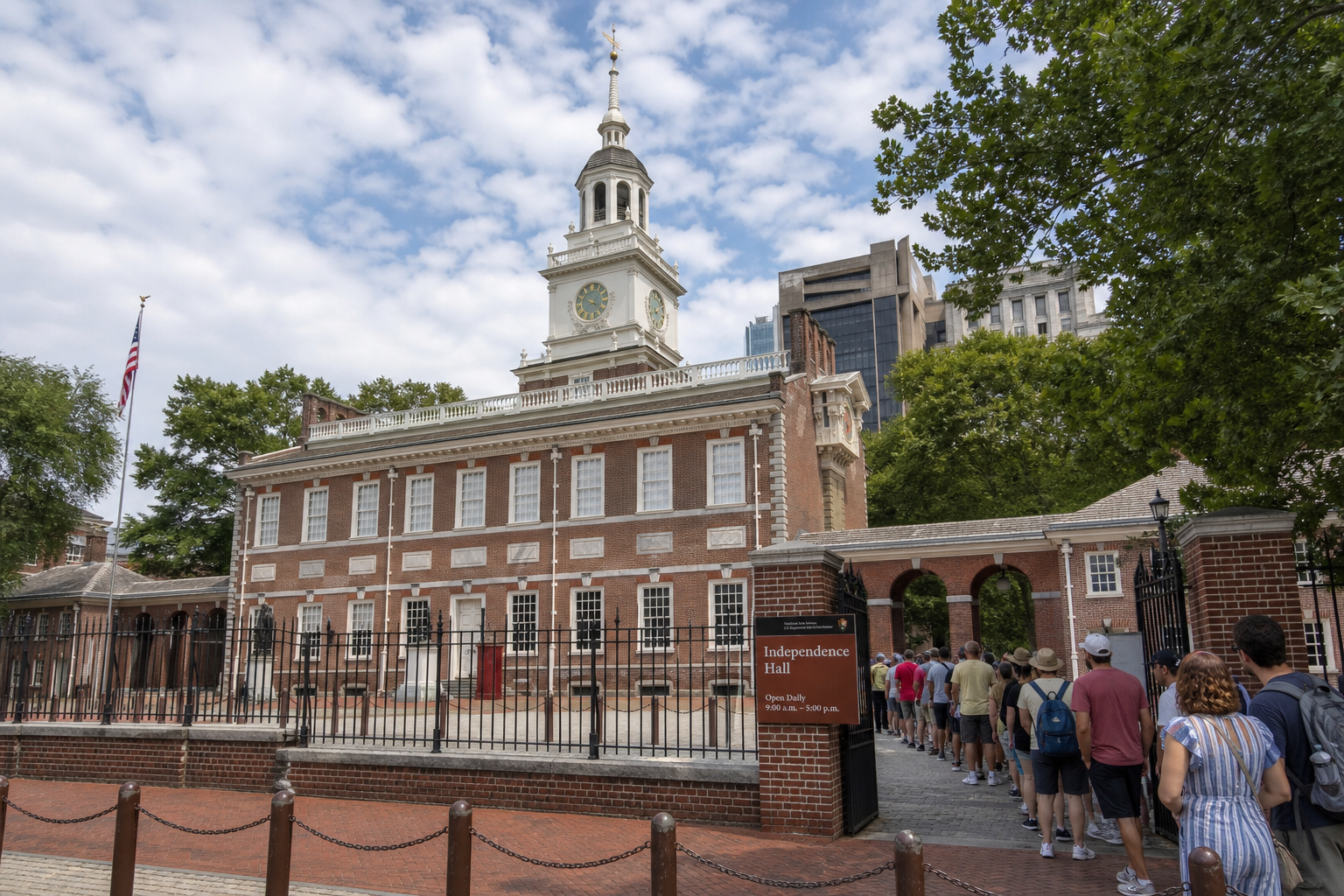
Independence Hall is the most significant building in the American founding narrative. Both the Declaration of Independence and the United States Constitution were debated and adopted within its walls. The building is a UNESCO World Heritage Site and the centerpiece of Independence National Historical Park.
| Detail | Information |
|---|---|
| Timed tickets required | Yes, free tickets via recreation.gov or Visitor Center |
| Tour type | Guided, led by National Park Service rangers |
| Tour duration | 30 to 40 minutes |
| Cost | Free with timed entry ticket |
| Accessibility | Accessible entrance available |
Are tickets required for Independence Hall? Yes. Free timed-entry tickets are required for the ranger-led tour of the building’s interior. Tickets are available online through recreation.gov up to one year in advance or at the Independence Visitor Center kiosk on the day of the visit. Advance reservation is strongly recommended from April through October, when daily allocations are typically claimed early.
The ranger-led tour covers the Assembly Room where both founding documents were signed, explains the historical context of the debates that took place there, and highlights original furnishings and architectural details that survived from the 18th century. Photography is permitted inside the building.
3. The Liberty Bell Center
The Liberty Bell Center, located immediately north of Independence Hall on Market Street, houses the original Liberty Bell in a climate-controlled pavilion. The center includes interpretive exhibits that trace the bell’s history from its casting in London in 1752 to its role as a symbol of American freedom and the abolitionist movement.
| Detail | Information |
|---|---|
| Tickets required | No (queue-based entry) |
| Cost | Free |
| Average wait time | 10 to 30 minutes (seasonal) |
| Photography | Yes, permitted in the viewing area |
| Accessibility | Fully accessible |
Can you touch the Liberty Bell or take photos inside? No. The Liberty Bell is displayed behind a protective barrier for preservation. Visitors view and photograph the bell from the designated viewing area, which allows a clear, close view including the famous crack. Photography is encouraged throughout the space.
The exhibition area also includes panels on the bell’s influence in social movements throughout American history, making the visit educational beyond the viewing of the artifact itself.
4. The President’s House Site
Located directly across from the Liberty Bell Center on Market Street, the President’s House site marks the location where George Washington and John Adams lived and governed as the first two Presidents of the United States. The site features an open-air commemorative installation that tells the complete story of the household, including the lives of enslaved individuals who served there.
| Detail | Information |
|---|---|
| Cost | Free |
| Tour type | Self-guided |
| Duration | 20 to 30 minutes |
| Accessibility | Fully accessible |
President’s House first White House site installations include partial structural reconstruction, original foundation outlines, interpretive panels, and audio elements that present multiple perspectives on the household’s history. The site provides an honest and layered view of the revolutionary period that complements the more formal narrative at Independence Hall.
5. Carpenters’ Hall
Carpenters’ Hall, located on Chestnut Street in Independence National Historical Park, is where the First Continental Congress convened in 1774. The building is the oldest surviving hall used for a major American political gathering and remains the headquarters of the Carpenters’ Company of the City and County of Philadelphia.
| Detail | Information |
|---|---|
| Cost | Free |
| Tour type | Self-guided |
| Duration | 20 to 30 minutes |
| Accessibility | Accessible entrance available |
Carpenters’ Hall Continental Congress exhibits include rotating displays related to the history of the building, the Carpenters’ Company, and the events of the First Continental Congress. The main Assembly Room is preserved in a manner reflecting its 18th-century appearance. Informational panels throughout the building provide historical context for visitors without a guide.
6. The Liberty Bell Betsy Ross House Tour Route
The Betsy Ross House on Arch Street, approximately one block north of the Liberty Bell Center, is the purported home of the woman credited with sewing the first American flag. The house operates as a museum with period-furnished rooms, exhibits on colonial domestic life, and costumed interpreters.
| Detail | Information |
|---|---|
| Admission | Paid (approximately $5 to $8 per adult) |
| Tour type | Self-guided with audio option |
| Duration | 30 to 45 minutes |
| Accessibility | Limited (narrow historic staircases) |
Are guided tours available at Betsy Ross House? The house offers a self-guided tour supported by an audio narration option. Costumed interpreters are stationed throughout the rooms during operating hours to answer questions and provide historical context. The courtyard and gift shop are accessible without admission.
A Liberty Bell Betsy Ross House tour pairing these two stops as a continuous walking route is one of the most efficient uses of time in the Old City district. The two sites are separated by a short walk of approximately five minutes.
7. Elfreth’s Alley
Elfreth’s Alley is the oldest continuously inhabited residential street in the United States. Located between Front and Second Streets, the alley features thirty-two historic homes dating from the early 18th century. The entire street is a National Historic Landmark.
| Detail | Information |
|---|---|
| Cost | Free to walk; museum house has small fee (~$5) |
| Tour type | Self-guided walking |
| Duration | 20 to 30 minutes |
| Accessibility | Cobblestone surface; limited wheelchair access |
Elfreth’s Alley oldest street Philadelphia is best experienced in early morning light before the tourist volume builds. Interpretive signs along the alley explain the history of the homes, the families who lived there across three centuries, and the architectural evolution of the street. The Elfreth’s Alley Museum at Houses 124 and 126 offers interior access to two period-furnished homes during operating hours.
8. Christ Church and Christ Church Burial Ground
Christ Church, established in 1695, served as the spiritual home for many leaders of the revolutionary generation, including George Washington, John Adams, Betsy Ross, and Benjamin Franklin. The church building, completed in 1727, is a landmark example of Georgian ecclesiastical architecture and one of the most historically significant houses of worship in the United States.
| Detail | Information |
|---|---|
| Church admission | Free (donations welcomed) |
| Burial ground admission | Approximately $3 to $5 |
| Tour type | Self-guided; docent-led on select days |
| Accessibility | Accessible entrance; burial ground has uneven surfaces |
Christ Church Benjamin Franklin grave visits at the adjacent Christ Church Burial Ground include the grave of Benjamin Franklin, where the long-standing tradition of tossing pennies onto the grave marker continues. The burial ground also contains the graves of several signers of the Declaration of Independence.
Interpretive signs throughout the burial ground identify notable graves and explain the significance of the individuals interred there.
9. Eastern State Penitentiary
Eastern State Penitentiary, located in the Fairmount neighborhood approximately two miles northwest of Old City, operated from 1829 to 1970 as one of the most influential and most controversial prisons in world history. Today it operates as a museum and National Historic Landmark with award-winning exhibits on criminal justice in America.
| Detail | Information |
|---|---|
| Admission | Paid (approximately $19 to $24 per adult) |
| Tour type | Self-guided with audio tour included |
| Duration | 45 to 90 minutes |
| Accessibility | Partial; some cellblocks have uneven surfaces |
Is Eastern State Penitentiary haunted or family-friendly? The main exhibits and audio tour are educational and appropriate for children ages 7 and above. The audio tour, narrated by actor Steve Buscemi, guides visitors through the cellblocks and explains the prison’s history, including Al Capone’s reconstructed cell. The site also hosts seasonal events with atmospheric and paranormal themes for adult visitors who prefer that experience.
Eastern State Penitentiary historic prison exhibits include interactive installations on modern incarceration, rotating art installations throughout the cellblocks, and detailed historical panels on the Pennsylvania System of solitary confinement that Eastern State pioneered in the 19th century.
Because Eastern State is located outside the walkable Old City district, a vehicle transfer from the historic core is recommended. Professional car service from the Independence Visitor Center area to Eastern State takes approximately eight to twelve minutes.
10. Philadelphia City Hall
Philadelphia City Hall is the largest municipal building in the United States and a masterwork of Second Empire architecture. Construction began in 1871 and was completed in 1901. The building’s tower rises 548 feet and is topped with a 37-foot bronze statue of William Penn, the founder of Pennsylvania.
| Detail | Information |
|---|---|
| Admission | Free for public areas; observation tower has a small fee (~$8) |
| Tour type | Self-guided; guided tours available on select days |
| Duration | 30 to 60 minutes |
| Accessibility | Accessible entrance and elevator available |
Philadelphia City Hall architecture tour visitors can explore the grand lobby, decorated council chambers, ornate staircases, and mosaic floors during self-guided visits. The observation deck at the base of the William Penn statue provides a panoramic view of Philadelphia that is particularly valuable for orientation at the beginning or end of a historic district visit.
Guided tours of City Hall are offered through the City Hall Visitor Center and provide deeper insight into the building’s construction history, the public art throughout the building, and the architectural details that make it one of the most significant civic structures in the country.
Free Historic Sites in Old City Philadelphia
Not every significant historic site in Philadelphia requires admission. Free historic sites Old City Philadelphia include:
| Site | Cost | Location |
|---|---|---|
| Independence Hall | Free (timed ticket required) | Chestnut Street at 5th |
| Liberty Bell Center | Free | Market Street at 6th |
| President’s House Site | Free | Market Street at 6th |
| Carpenters’ Hall | Free | Chestnut Street at 4th |
| Elfreth’s Alley (street) | Free | Between Front and 2nd |
| Independence Mall grounds | Free | 6th Street corridor |
Visitors planning a budget-conscious trip can spend an entire day in the Old City historic district visiting significant sites without paying any admission fees. The paid sites, including the Betsy Ross House, Eastern State Penitentiary, and the National Constitution Center, offer enhanced experiences but are not essential to a substantive historic Philadelphia visit.
Suggested One-Day Itinerary
Top 10 historic landmarks Philadelphia one day itinerary:
| Time | Stop | Duration |
|---|---|---|
| 9:00am | Independence Visitor Center | 15 min |
| 9:15am | Independence Hall (timed entry) | 40 min |
| 10:00am | Liberty Bell Center | 20 min |
| 10:25am | President’s House Site | 20 min |
| 10:50am | Carpenters’ Hall | 20 min |
| 11:15am | Christ Church and Burial Ground | 30 min |
| 11:50am | Elfreth’s Alley | 25 min |
| 12:20pm | Betsy Ross House | 35 min |
| 1:00pm | Lunch in Old City | 45 min |
| 2:00pm | Philadelphia City Hall | 45 min |
| 3:00pm | National Constitution Center | 75 min |
| 4:30pm | Eastern State Penitentiary (vehicle transfer) | 75 min |
This itinerary covers the top historical attractions in Philadelphia in a single well-paced day. A vehicle transfer for the Eastern State portion eliminates a long walk and keeps the group energized for the final landmark.
Independence National Historical Park Tickets: A Summary
Independence National Historical Park tickets and entry requirements vary by site:
| Site | Ticket Required | Cost | Advance Booking |
|---|---|---|---|
| Independence Hall | Yes (timed entry) | Free | Strongly recommended |
| Liberty Bell Center | No | Free | Not required |
| National Constitution Center | Yes | $16 to $20 per adult | Recommended in peak season |
| Carpenters’ Hall | No | Free | Not required |
| President’s House | No | Free | Not required |
All Independence National Historical Park timed tickets for Independence Hall are issued through recreation.gov. This government booking platform allows reservations up to one year in advance and confirms the exact entry window. Visitors who do not reserve in advance should arrive at the Visitor Center early on the day of their visit to secure same-day tickets before the daily allocation is claimed.
How Private Transportation Enhances a Historic Philadelphia Visit
A visit to the best historical attractions in Philadelphia is significantly more comfortable and efficient when ground transportation is arranged in advance. Delux Limousine Transportation Services provides private vehicle transfers for tourists, families, school groups, and visiting professionals throughout the Philadelphia region.
Benefits of professional car service for historic sightseeing:
- Door-to-door service: The vehicle delivers the group to each landmark entrance and waits for the return
- No parking stress: All parking logistics are handled by the professional chauffeur
- Multi-site flexibility: Eastern State Penitentiary, Philadelphia City Hall, and other sites outside the walking district are reached efficiently
- Comfortable rest between stops: Climate-controlled travel between landmarks removes fatigue from a long day of walking
- Group accommodation: A Mercedes Sprinter van accommodates families, school groups, and tour parties of up to fourteen passengers
For visitors arriving from the Main Line, Delaware County, or Philadelphia International Airport, a pre-booked private transfer to the Independence Visitor Center and the broader historic district creates a complete, worry-free day.
Explore available vehicles and service options at dltsl.com/services. Contact the reservations team through the Delux contact page to book a private sightseeing transfer.
Follow Delux on Facebook and Instagram for Philadelphia travel updates and vehicle showcases. Independent client reviews are available on Yelp. Corporate and group inquiries are welcomed through LinkedIn.
Frequently Asked Questions
Are tickets required for Independence Hall?
Yes. Free timed-entry tickets are required for the ranger-led interior tour. Tickets are available through recreation.gov or at the Independence Visitor Center. Advance reservation is strongly recommended during peak visiting season.
Can you touch the Liberty Bell or take photos inside?
No. The Liberty Bell is displayed behind a protective barrier. Photography is permitted and encouraged from the designated viewing area.
What is the best order to visit Philadelphia’s historic sites?
Start at the Independence Visitor Center to collect maps and obtain timed tickets for Independence Hall. Follow the natural walking route through the Old City district before adding sites farther from the core, such as Eastern State Penitentiary and City Hall.
How long does a full historic district walking tour take?
Three to five hours for a thorough visit. A condensed tour covering only the top five sites can be completed in two to three hours.
Are guided tours available at Betsy Ross House?
The Betsy Ross House offers a self-guided tour with an audio narration option. Costumed interpreters are present in select rooms during operating hours.
Is Eastern State Penitentiary haunted or family-friendly?
The main exhibits and audio tour are family-friendly for children ages seven and above. Seasonal atmospheric events cater to adult visitors seeking a more intense experience.
Where can visitors find free historic walking maps?
The Independence Visitor Center distributes free printed maps. Digital versions are available through the National Park Service website.
Do sites offer accessibility for wheelchairs?
Most major sites offer accessible entrances and routes. The Betsy Ross House and some areas of Christ Church Burial Ground have limited accessibility due to historic structural constraints.
What is nearby parking for Old City landmarks?
Paid garages throughout Old City and Society Hill charge approximately $20 to $30 per day. Metered street parking is available but limited and time-restricted.
Are combo tickets available for multiple historic sites?
Yes. Packages combining admission to multiple paid attractions are available in the range of $25 to $40 through the Independence Visitor Center and individual attraction websites.
What is the best time to visit to avoid crowds?
Early morning on weekdays, particularly before 10:00am on Thursday and Friday, offers the lowest visitor volume.
Can kids enjoy Philadelphia historic landmarks?
Yes. Interactive exhibits at the National Constitution Center, the audio tour at Eastern State Penitentiary, costumed interpreters at the Betsy Ross House, and junior ranger programs at Independence National Historical Park make the visit engaging for children.
Conclusion: Experience Philadelphia’s History With Purpose and Comfort
The top historic landmarks to visit in Philadelphia tell the complete story of the American nation’s founding. From the Assembly Room at Independence Hall to the cobblestones of Elfreth’s Alley, from the Liberty Bell to the grave of Benjamin Franklin, each site contributes a distinct and essential chapter to the larger narrative.
The quality of the visit depends on preparation. Reserving Independence Hall tickets in advance, starting at the Visitor Center, following a logical walking route, and allowing adequate time at each site transforms a list of landmarks into a coherent and memorable day. For visitors who want to add Eastern State Penitentiary, Philadelphia City Hall, or sites outside the walkable historic core, private vehicle transfers remove the logistical friction between stops.
The top historic landmarks to visit in Philadelphia are waiting. Plan the visit carefully, travel in comfort, and experience the places where the United States of America came to be.
Book Your Philadelphia Historic Sightseeing Transfer
Call: 610-871-8784
WhatsApp: 267-988-3392
Email: reservations@dltsl.com