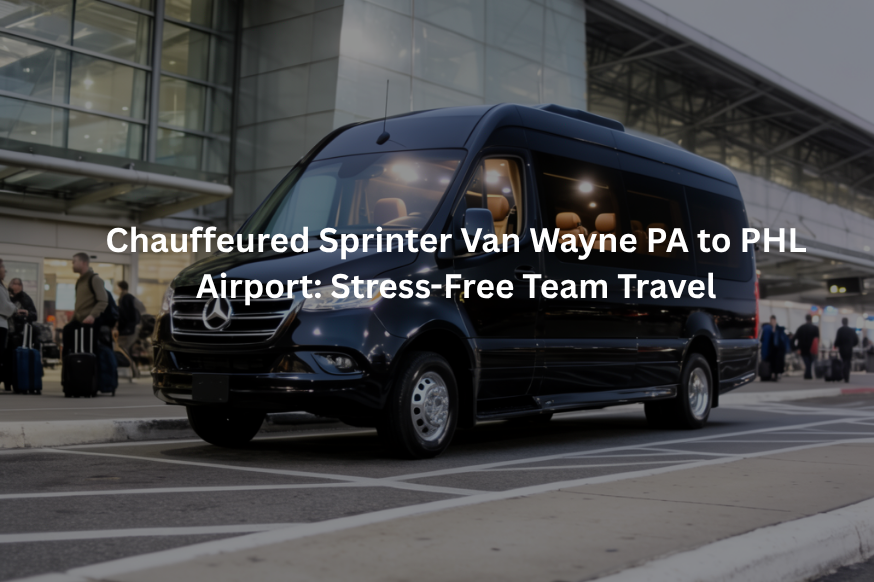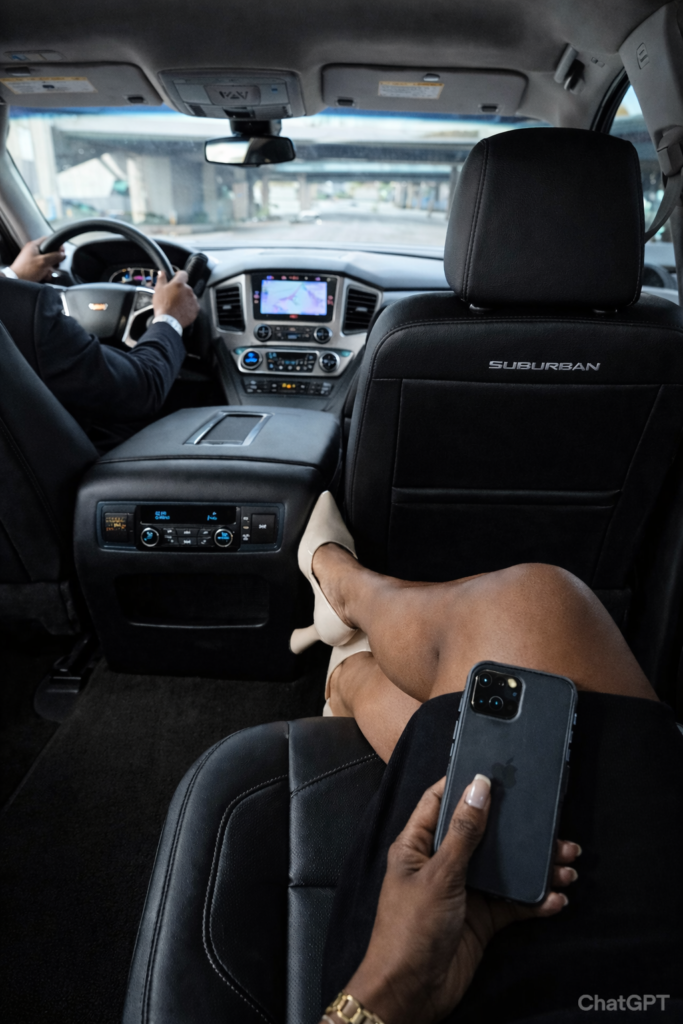
You’ve booked the perfect retreat venue. The agenda looks great. Team-building activities are lined up. Everything’s set until someone asks, “Wait, how is everyone actually getting there?”
That’s when you realize corporate transportation for retreats isn’t just a box to check. It’s the foundation that either makes your entire event run smoothly or turns it into a logistical nightmare where people show up late, stressed, and scattered.
I’ve seen both scenarios play out. The difference between a retreat that starts with energy and one that starts with chaos? A solid transportation plan. Let me walk you through the seven steps that turn corporate transportation for retreats from a headache into your secret weapon for success.
Why Corporate Transportation for Retreats Deserves Your Attention
Here’s the thing about company retreats: you’re pulling people out of their routines, away from their offices, and asking them to bond, strategize, and engage in a completely different environment. That’s already a lot.
The last thing you want is your team arriving in waves over two hours, with half the group stuck in traffic, three people lost on back roads, and your CEO waiting impatiently while the facilitator burns through your paid time.
Research shows that face-to-face meetings are far more effective than virtual ones, with 73% of corporate travelers feeling this way. But those benefits disappear when poor corporate transportation for retreats means people arrive exhausted, frustrated, or so late they miss key sessions.
Professional corporate transportation for retreats solves multiple problems at once:
- Everyone arrives together and on time
- Team bonding starts during the ride, not after arrival
- No one’s worried about directions, traffic, or parking
- Leaders can relax instead of playing traffic coordinator
- Your retreat actually starts when it’s supposed to start
Step 1: Calculate Your Real Transportation Needs
Before you call any transportation companies, you need actual numbers. Vague estimates will cost you money and create problems.
Start With These Questions:
How many people are actually attending? Don’t guess get confirmed headcounts. Are spouses or partners coming? Factor them in from the start.
Where is everyone coming from? Same office? Multiple locations? Different cities? This matters more than you think when planning corporate transportation for retreats.
What’s the distance to your retreat venue? A 20-mile trip needs different planning than a 200-mile journey.
How much luggage will people have? Overnight bags need less space than weekend suitcases. Multi-day retreats with business attire require more room.
Are there any special needs? Wheelchair accessibility, medical considerations, or mobility issues need to be addressed upfront.
The Hidden Details That Trip People Up:
Many planners forget about the return trip. Your transportation needs might be different coming back—people who carpooled there might need rides to airports, train stations, or different drop-off points.
Also, consider whether you need transportation during the retreat itself. Will your team be leaving the venue for dinners, activities, or team-building events? That requires a different corporate transportation for retreats approach than simple point-to-point service.
One company I know planned transportation for 50 people to a countryside retreat but forgot to account for the 15 people flying in who needed airport pickups at different times. Last-minute emergency rides cost them an extra $2,000.
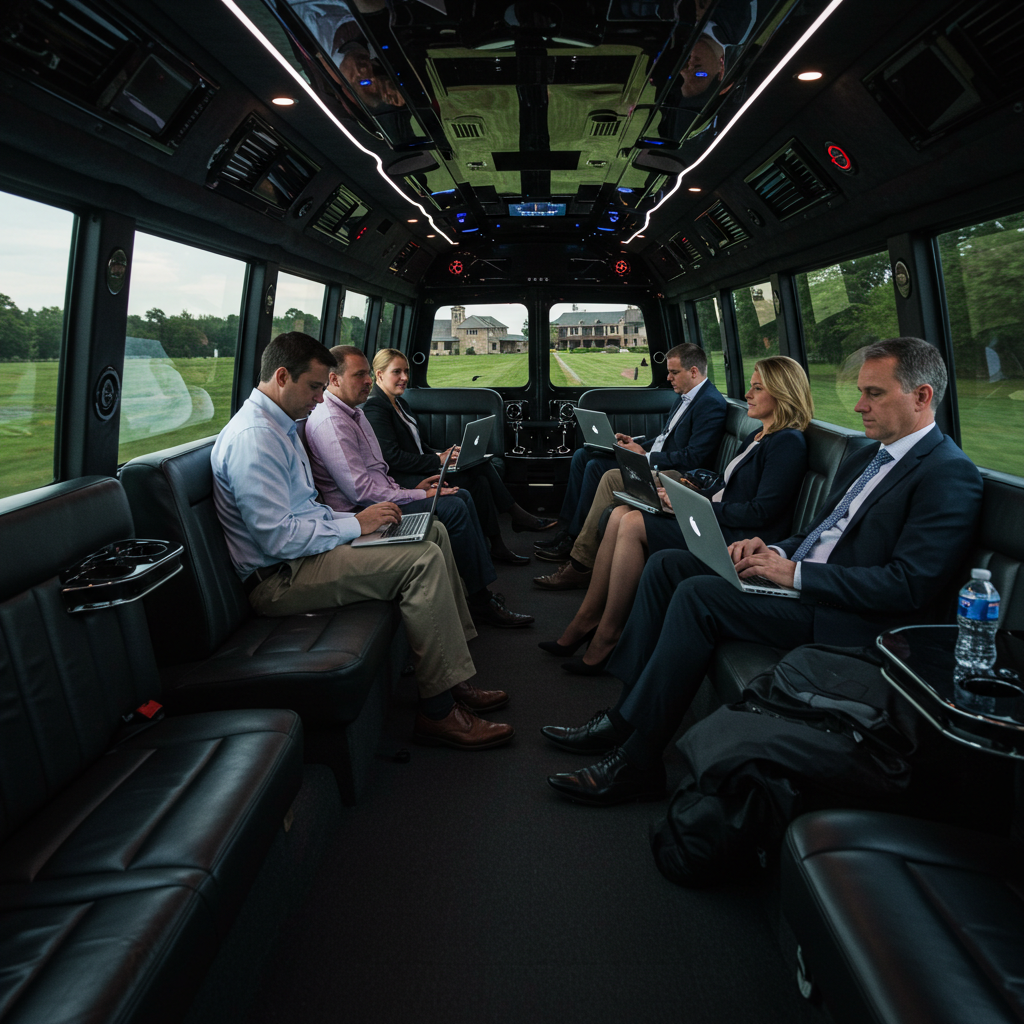
Step 2: Choose the Right Vehicle Mix for Your Group
Not all corporate groups need the same type of vehicles. The right mix depends on your team size, budget, and the image you want to project.
Corporate Transportation Vehicle Comparison
| Vehicle Type | Passenger Capacity | Best For | Key Benefits |
|---|---|---|---|
| Executive Sedan | 2-3 passengers | C-suite executives, VIP guests | Professional image, privacy, comfort |
| Luxury SUV | 5-7 passengers | Senior leadership team, small groups | Space for luggage, comfort, weather readiness |
| Sprinter Van | 10-14 passengers | Mid-size teams, airport shuttles | Upright seating, luggage space, efficient |
| Mini Coach | 20-35 passengers | Departments, medium groups | Cost-effective, comfortable, group unity |
| Charter Bus | 40-56 passengers | Large teams, multi-department retreats | Lowest per-person cost, maximum capacity |
| Party Bus | 20-40 passengers | Creative teams, casual culture | Entertainment value, team bonding during travel |
The smartest corporate transportation for retreats often combines vehicle types. Maybe your executive team travels in SUVs while the broader team rides a charter bus together. Or perhaps you use Sprinter vans for flexibility in picking up from multiple locations.
Professional transportation services understand how to mix vehicles to meet different needs within one corporate event while keeping everything coordinated and on schedule.

Step 3: Book Early and Lock In Your Dates
This is where so many retreat planners mess up. They nail down the venue six months ahead but wait until six weeks before to think about transportation. By then, the best options are gone and prices are higher.
The Booking Timeline That Works:
4-6 Months Before: Ideal window for booking corporate transportation for retreats, especially for peak season (May through October) or major conferences that book up transportation fleets.
2-3 Months Before: Still viable, but expect limited vehicle selection and potentially higher rates.
Less Than 6 Weeks: Emergency territory. You’ll find something, but it won’t be ideal and you’ll pay premium rates.
When you book early, you get:
- First choice of vehicles
- Better pricing (many companies offer early-bird rates)
- Ability to modify details without penalties
- Peace of mind that this critical piece is handled
Plus, professional corporate transportation for retreats providers can advise on logistics you haven’t considered. They’ve done hundreds of corporate events and know what works.
Check reviews on Yelp, Facebook, and LinkedIn to find companies with strong corporate retreat experience—these aren’t companies you want to discover the day before your event.
Step 4: Build a Detailed Transportation Schedule
This is where good planning separates from great planning. A detailed schedule means everyone knows exactly what’s happening and when.
Your Schedule Should Include:
Departure Times and Locations: Where is everyone meeting? What time does the vehicle leave? Be specific—”8:00 AM sharp” means the bus rolls at 8:00, not that people should start showing up then.
Estimated Travel Time: Factor in realistic travel times with buffer for traffic. If GPS says 90 minutes, plan for 2 hours during rush hour.
Rest Stop Plans: For trips over 90 minutes, schedule bathroom and stretch breaks. Your team will appreciate it.
Arrival Time: When will you actually arrive at the retreat venue? Coordinate with venue staff and your first session timing.
Return Transportation: Include pickup times for the return journey, accounting for the retreat ending time plus buffer.
During-Retreat Transportation: If you need vehicles for dinners, activities, or off-site events during the retreat, schedule these specifically.
When planning corporate transportation for retreats, professional services recommend creating detailed itineraries that outline each leg of the journey with specific times for departure, breaks, and arrival.
Share this schedule with everyone at least one week before the retreat. Send reminders two days before and the morning of departure.
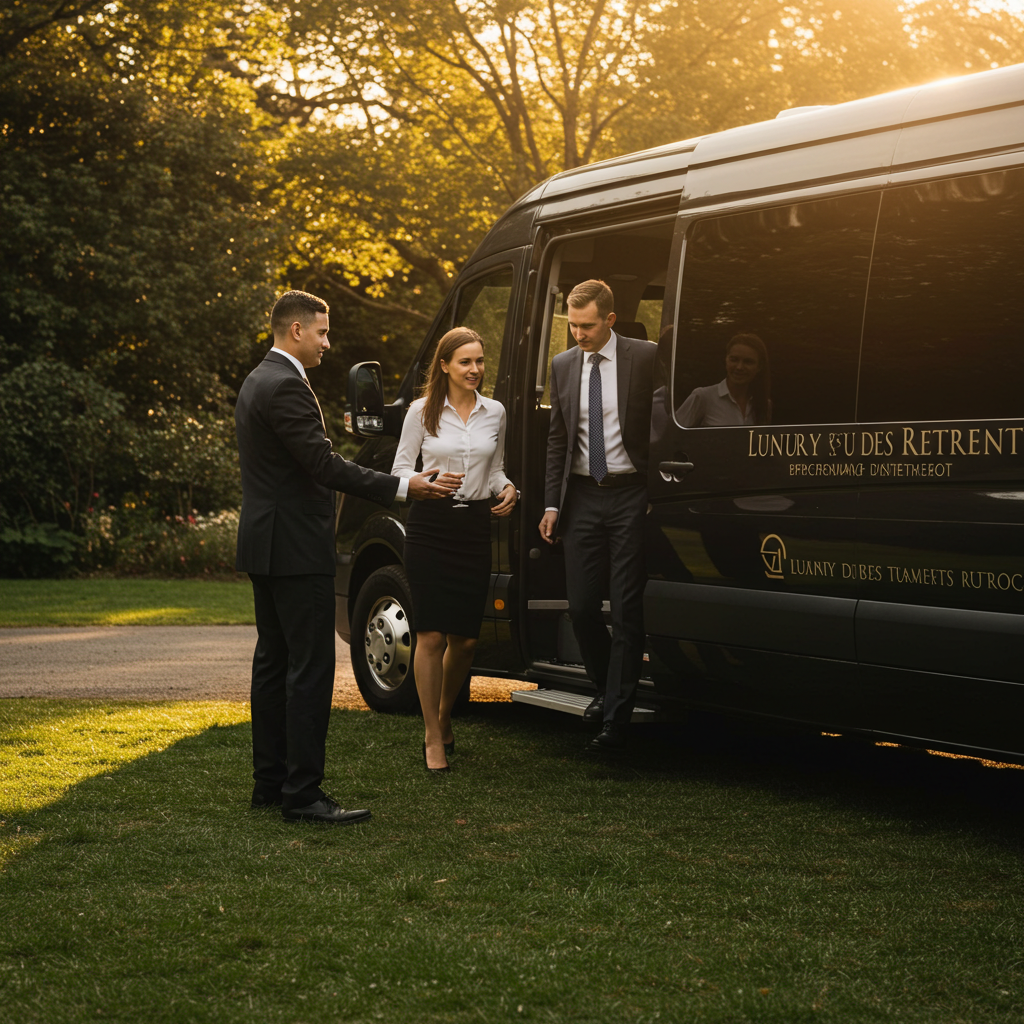
Step 5: Communicate Clearly With Your Team
Even perfect corporate transportation for retreats fails if people don’t know the plan. Communication makes or breaks execution.
What Your Team Needs to Know:
Pickup Location: Be incredibly specific. “The office parking lot” isn’t enough—where exactly in the parking lot? Near which door? Give landmarks.
Departure Time: Make it clear whether this is “be there by” or “we leave at” time. Professional tip: tell people to arrive 15 minutes before actual departure.
What to Bring: Luggage size limits if any, what’s provided on the vehicle, whether food/drinks are allowed.
Contact Information: Who do they call if they’re running late or have problems? Get the driver’s number and share it.
What’s Provided: Will there be water, WiFi, charging ports? Set expectations.
Dress Code for Travel: Should people come in business casual or can they wear comfortable travel clothes?
Return Schedule: When transportation leaves to return, what happens if they want to leave early or stay later.
Send this information multiple times through multiple channels—email, Slack, team meetings. You’ll still get questions, but you’ll minimize confusion.
For corporate transportation for retreats, overcommunication is your friend. The goal is zero surprises on departure day.
Step 6: Plan for the Unexpected
Even with perfect planning, things happen. Weather changes. Flights get delayed. People get sick. Your corporate transportation for retreats plan needs flexibility built in.
Smart Backup Planning:
Weather Contingencies: What happens if snow, heavy rain, or other weather affects travel? Professional drivers have experience with conditions, but you need plan B timing.
Late Arrivals: Build buffer time into your schedule. If someone’s running 10 minutes late, can the group wait? At what point do you leave without them and arrange alternative transportation?
Flight Delays: For team members flying in, track flights and have a plan for delayed arrivals. Can the driver wait? Is there a later shuttle option?
Vehicle Issues: Ask your transportation provider about backup vehicles. What happens if there’s a mechanical issue? Reputable companies have contingency plans.
Route Alternatives: Especially in rural retreat locations, know alternate routes in case of road closures or traffic disasters.
Medical Emergencies: Have a plan for what happens if someone has a medical issue during travel. Drivers should know nearby hospitals, but you should too.
The best corporate transportation for retreats providers have dealt with all these scenarios. Ask them directly: “What happens if…?” Their answers tell you how prepared they are.
Companies with strong operational experience document their contingency procedures and can walk you through backup plans before problems occur.
Step 7: Maximize the Journey as Part of the Experience
Here’s something most planners miss: the travel time itself is valuable. Your retreat doesn’t have to start when you arrive at the venue—it can start the moment everyone boards.
Making Transportation Part of Your Retreat:
Team Bonding During Travel: People who usually sit in different departments end up sitting together. Conversations happen naturally. For many teams, this informal time is where real connections form.
Pre-Retreat Briefing: Use travel time for your retreat kickoff. Share the agenda, set expectations, build excitement. You arrive ready to dive in rather than needing an orientation session.
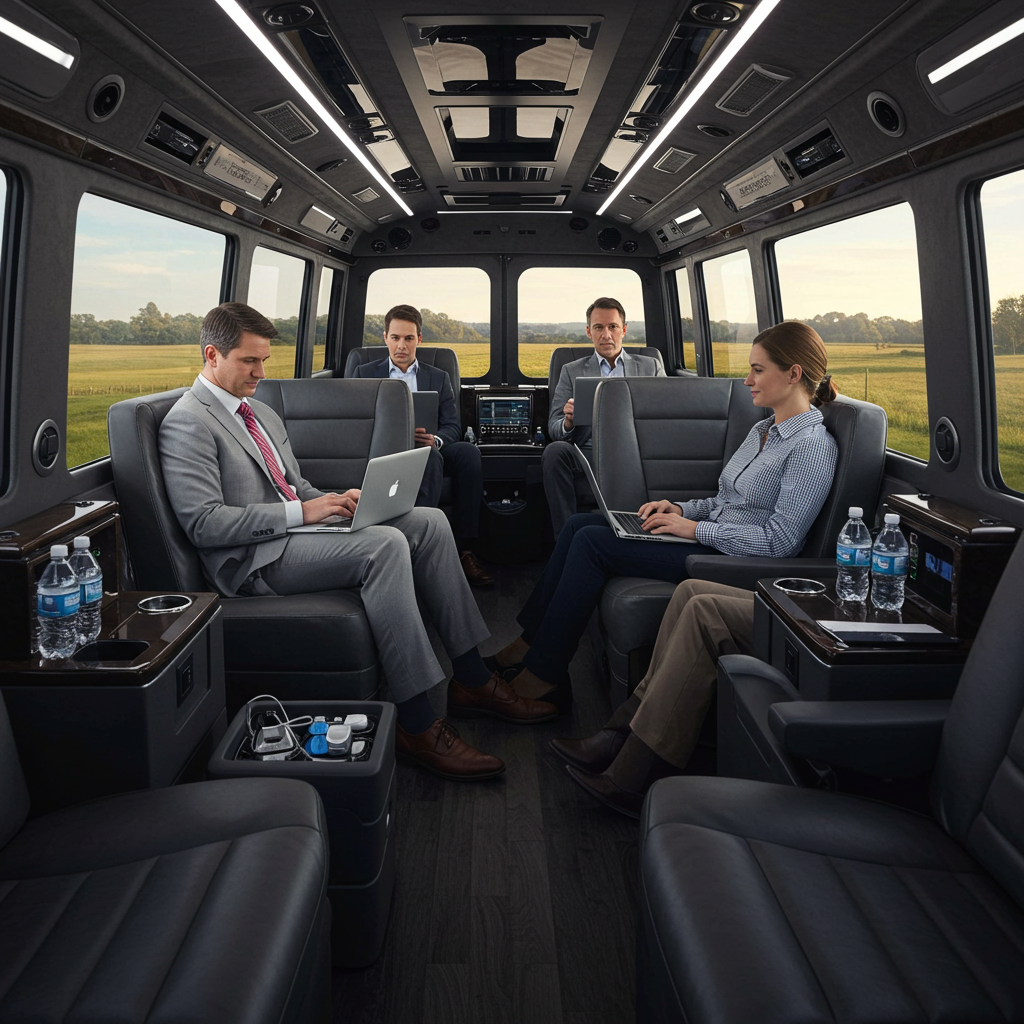
Entertainment and Comfort: Depending on your vehicle choice, you might have WiFi, screens for presentations, sound systems. Use these thoughtfully.
Work Sessions: For longer trips, some teams schedule actual work time during travel. Not ideal for team bonding, but sometimes practical for busy executives.
Relaxation Time: Alternatively, frame the journey as decompression time. Let people nap, listen to music, or just zone out. They’ll arrive more refreshed.
The key is intentionality. Don’t just view corporate transportation for retreats as getting from A to B. It’s your first opportunity to set the tone for the entire event.
One company I know uses the 90-minute bus ride to their retreat venue for an informal “state of the company” discussion. By the time they arrive, everyone’s on the same page and ready to dig into strategy sessions.
Cost Considerations: Budget Smart, Not Cheap
Let’s talk money because corporate transportation for retreats represents a real line item in your budget.
Typical Cost Factors:
- Distance: Longer trips cost more, obviously, but ask about flat rates vs. hourly rates
- Vehicle Type: Luxury vehicles cost more than standard coaches
- Duration: Is this round-trip same day, overnight availability, or multi-day?
- Waiting Time: Will vehicles wait during your retreat or return to pick you up?
- Additional Services: WiFi, beverages, special requests add cost
- Peak Timing: Weekend and holiday rates may be higher
- Fuel Surcharges: Some companies add these during high gas price periods
The False Economy of Cutting Transportation Costs:
I’ve seen companies try to “save money” by having employees drive themselves or arranging carpools. Here’s what actually happens:
- People arrive over 1-2 hours instead of together
- Parking becomes a problem at the retreat venue
- Someone always gets lost, causing delays
- Team members who should be networking are isolated in separate cars
- Leaders spend retreat time coordinating arrivals instead of focusing on content
- Return transportation becomes a free-for-all
The “savings” disappear when you factor in lost productivity, poor experiences, and coordinator stress.
Professional corporate transportation for retreats typically costs $800-3,000 depending on group size, distance, and vehicle type. When you divide that by attendees, it’s often $30-75 per person for round-trip transportation that ensures a smooth experience.
That’s cheaper than the value of one executive’s time spent coordinating carpools or waiting for late arrivals.
Special Considerations for Different Retreat Types
Not all corporate retreats need identical corporate transportation for retreats approaches. Your strategy should match your retreat style.
Strategic Planning Retreats:
These tend to include senior leadership in smaller numbers. Consider luxury vehicles that allow continuation of discussions during travel. Privacy and comfort matter more than capacity.
Team-Building Retreats:
Larger groups focused on bonding. Charter buses or multiple vans keep teams together and interaction high. The journey becomes part of the team-building process.
Sales Kickoffs:
High energy, potentially large numbers, often near hotels or conference centers. Efficient shuttle loops between hotels and venue. Timing precision is critical.
Executive Offsites:
Small VIP groups expecting luxury. Multiple premium vehicles, flexibility in scheduling, professional chauffeurs who understand corporate protocol.
Multi-Location Retreats:
Moving between venues or activities. You need vehicles that stay with your group, not just drop-off/pickup service. Flexibility and communication with drivers becomes essential.
Wellness Retreats:
Comfort and relaxation extend to transportation. Consider vehicles with extra space, quiet rides, perhaps amenities like healthy snacks or meditation music.
Match your corporate transportation for retreats to the retreat’s goals. A wellness retreat in cramped vehicles contradicts your message. A high-energy sales kickoff in separate sedans misses bonding opportunities.
Working With Your Transportation Provider
Once you’ve chosen a company for your corporate transportation for retreats, the relationship matters. Here’s how to get the best results:
Be Honest About Your Needs: Don’t downplay challenges or pretend you’re more organized than you are. Good providers help you solve problems, but only if they know about them.
Get Everything in Writing: Contract should include vehicle types, pickup/dropoff locations, timing, total cost, what’s included, cancellation policy, and contingency plans.
Assign a Point Person: One person from your team communicates with the transportation company. Multiple people giving different instructions creates confusion.
Do a Final Confirmation: Call or email 48-72 hours before your retreat to confirm all details. This catches any miscommunications before they become problems.
Provide Driver Contact to Key People: Your retreat organizer and a few backups should have driver phone numbers for day-of coordination.
Tip Appropriately: Professional drivers for corporate events typically receive 15-20% gratuity, either included in your contract or paid at service completion.
Give Feedback: After your retreat, let the company know what worked and what didn’t. This helps them improve and helps you get better service next time.
The best corporate transportation for retreats relationships become ongoing partnerships. Companies learn your preferences, culture, and needs. You get preferential treatment and smoother service.
Many corporations establish corporate accounts with transportation providers for this exact reason—consistency, reliability, and relationship value.
Common Mistakes to Avoid
After seeing dozens of corporate retreats, here are the mistakes that keep coming up:
Waiting Too Long to Book: By the time you remember transportation, good options are limited. Book when you book the venue.
Not Accounting for Luggage: That 15-passenger van fits 15 people without luggage. With bags, you need a bigger vehicle or two vehicles.
Forgetting Return Transportation: Some planners focus entirely on getting there and wing the return. That’s how people get left behind or create chaos.
Poor Communication: Assuming everyone knows the plan. They don’t. Overcommunicate.
No Buffer Time: Scheduling arrival for exactly when your first session starts. What could go wrong? Everything.
Ignoring Weather Forecasts: That countryside retreat in December might hit snow. Plan transportation accordingly.
Mixing Personal and Group Transportation: Allowing some people to drive themselves while others take group transportation. Pick one approach.
No Point Person: Everyone assumes someone else is handling coordination. Designate one person clearly in charge.
Choosing Based Only on Price: The cheapest option often isn’t. Factor in reliability, vehicle quality, and service reputation.
Not Reading Reviews: Past customer experiences tell you what to expect. Ignore them at your peril.
Good corporate transportation for retreats means avoiding these traps before they become problems.
Making Your Decision
You’re ready to book. How do you choose the right provider for corporate transportation for retreats?
Questions to Ask Potential Providers:
- How many corporate retreats do you handle per year?
- Can you provide references from similar companies?
- What happens if there’s a vehicle issue on event day?
- Do you have backup vehicles available?
- What’s included in your quoted price?
- What’s your cancellation and modification policy?
- How do you handle flight delays or schedule changes?
- What amenities are standard in your vehicles?
- Do drivers have experience with corporate groups?
- Can we inspect vehicles before booking?
Their answers reveal professionalism, experience, and reliability. Companies that have handled hundreds of corporate retreats answer these questions easily and specifically.
Check multiple sources for reviews—Google, Yelp, Facebook, LinkedIn, Better Business Bureau. Look for patterns, not individual complaints.
Ask your network. Other companies in your area have probably done retreats. Who did they use? Would they recommend them?
The Bottom Line
Corporate transportation for retreats is one of those things that’s invisible when done right and disastrous when done wrong. Nobody remembers the smooth, on-time transportation. Everyone remembers arriving late, stressed, and scattered.
Your seven-step approach:
- Calculate real needs with accurate numbers
- Choose the right vehicle mix for your group
- Book early and lock in dates
- Build detailed transportation schedules
- Communicate clearly with your team
- Plan for unexpected contingencies
- Maximize the journey as part of your retreat experience
Follow these steps and your retreat starts strong. Your team arrives together, on time, and ready to engage. Leaders focus on content instead of logistics. The experience feels professional, thoughtful, and smooth.
That’s worth the planning time and the investment in professional corporate transportation for retreats.
Your retreat’s success starts before anyone reaches the venue. It starts the moment your team boards their transportation, knowing someone has thought through every detail and everything’s handled.
Make transportation your secret weapon, not your overlooked weakness.
Ready to Plan Your Corporate Retreat Transportation?
Call: 610-871-8784
WhatsApp: 267-988-3392
Email: reservations@dltsl.com
Let us handle your corporate transportation for retreats so you can focus on creating an amazing experience for your team.