When a corporate event runs well, transportation is invisible. Attendees arrive on time, executives move between sessions without friction, and airport pickups happen without anyone having to manage logistics from their phone during a keynote. When transportation is poorly planned, it becomes the thing everyone remembers, and not in a favorable way.
Planning corporate event transportation in Blue Bell’s suburbs requires a different approach than booking a single car for a single executive. The scale is larger, the variables multiply quickly, and the margin for error is smaller when dozens of employees, clients, and speakers are relying on a coordinated ground transportation plan.
This guide covers how to build that plan effectively, what questions to ask, which vehicles serve which functions, and where corporate event transportation in Montgomery County most commonly breaks down.
Understanding the Geography Before You Plan the Logistics
Blue Bell’s suburban corridor is one of the most active business zones in Montgomery County. The corporate density along routes connecting Blue Bell to Horsham, Willow Grove, Ambler, Upper Dublin, Fort Washington, Montgomeryville, Plymouth Meeting, and King of Prussia creates a web of potential travel needs for any company holding a regional event.
That geography matters because it directly shapes transportation complexity. Employees may be arriving from a dozen different directions. Hotel blocks are often split across properties in Blue Bell, Plymouth Meeting, and the Route 202 corridor. Airport arrivals at Philadelphia International (PHL) need to connect to suburban venues that rideshares don’t always serve efficiently during off-peak hours.
The companies that plan this well don’t wait until two weeks before the event to think about vehicles. They think about routes first.
The Most Common Planning Mistakes in Corporate Event Transportation
Before getting into solutions, it’s worth naming the patterns that consistently create problems at corporate events in this area.
Underestimating the airport wave. When dozens of attendees are arriving at PHL within a few-hour window, the assumption that they’ll each handle their own ground transportation creates a fragmented, stressful arrival experience. Someone misses a shuttle. Someone else pays surge pricing at 7 p.m. on a Tuesday and arrives late to the opening dinner.
Booking vehicles without a route plan. Knowing you need “some sedans and a Sprinter” is not a plan. A usable plan includes exact pickup locations, drop-off addresses, timing, the order of stops, and who is responsible for communicating with drivers.
Treating VIP and general employee transportation as the same service. A board member arriving from New York and a group of 20 junior employees coming from the King of Prussia office have different transportation needs, different timing sensitivities, and different expectations. Bundling them into the same approach usually creates gaps.
Not building buffer time. The stretch of Route 309 between Blue Bell and Lansdale can slow significantly during the 4:30 to 6:30 p.m. window. The Pennsylvania Turnpike interchange near Plymouth Meeting creates consistent congestion when events coincide with commuter traffic. Plans that assume best-case travel times fall apart when actual conditions apply.
Matching Vehicles to Functions at Corporate Events
The vehicle selection question is genuinely important and often approached too casually. Here’s how different vehicle types align with different event functions:
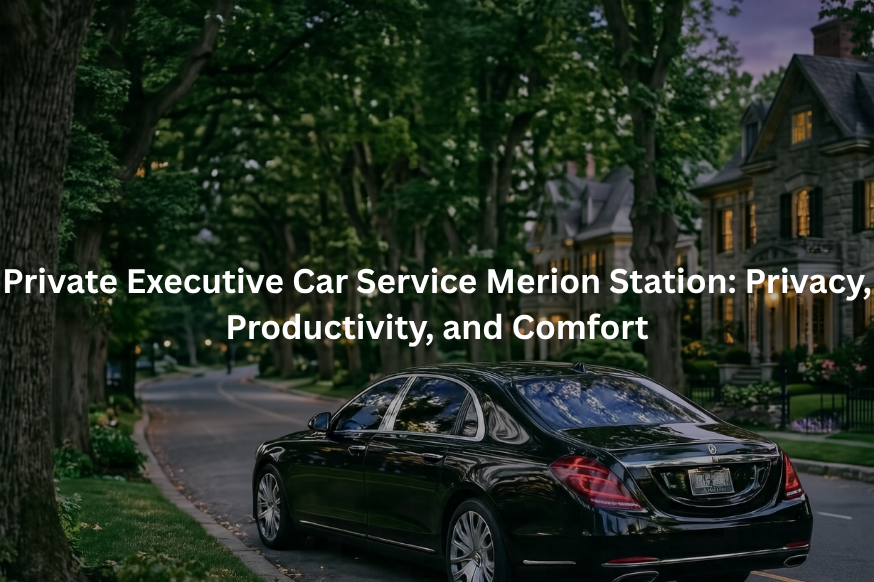
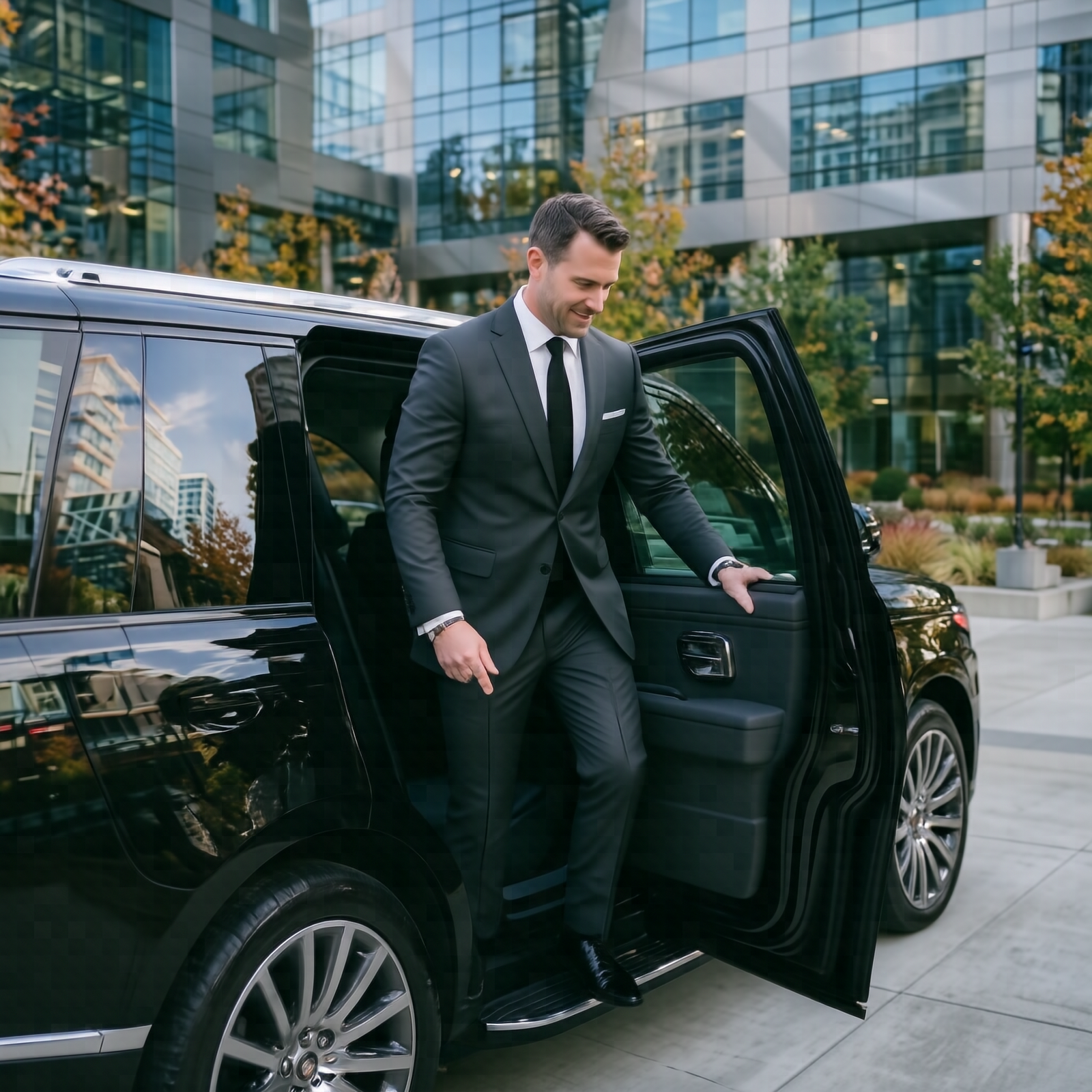
Executive Sedans serve the highest-priority individual travelers. CEOs, board members, keynote speakers, major clients, and investors traveling solo or in pairs should be in executive sedans with dedicated chauffeurs. The vehicle communicates professional attention without excess. For a visiting client making a first impression of your company, the car that picks them up sets a tone.
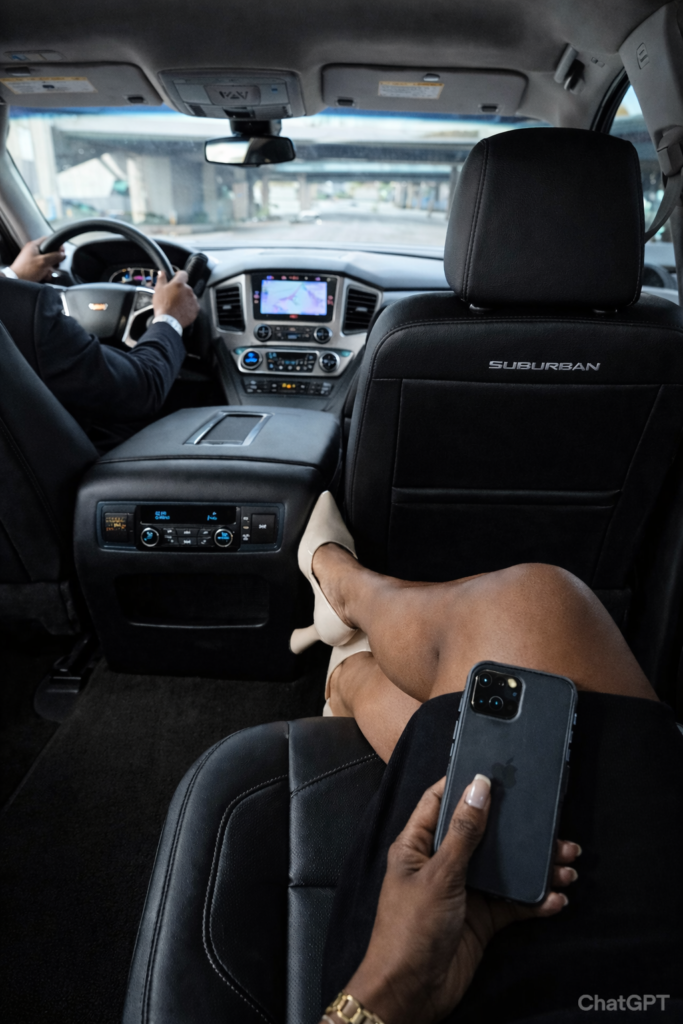
Luxury SUVs handle small groups with more luggage, teams of three to five colleagues, or any executive who needs additional space. They’re also the appropriate choice when the weather creates conditions that make a lower-clearance sedan less practical on suburban roads.
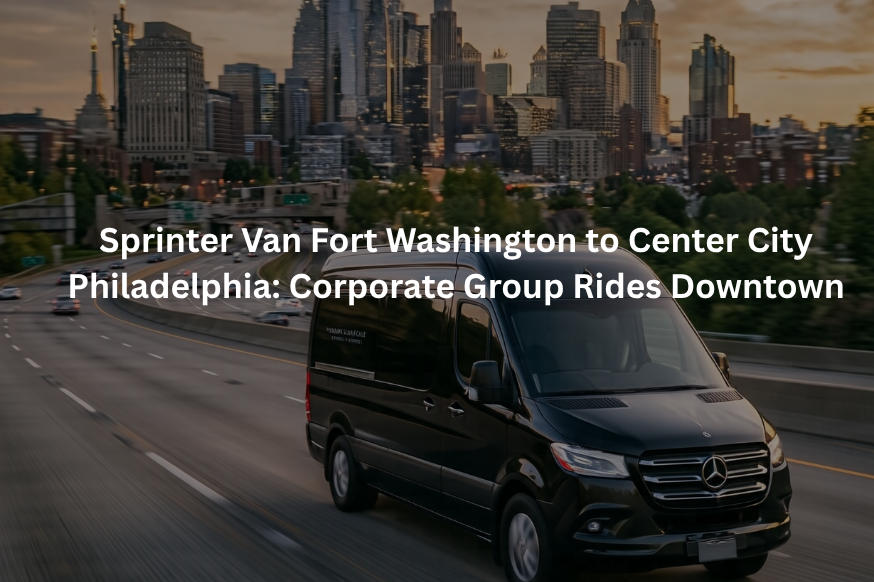
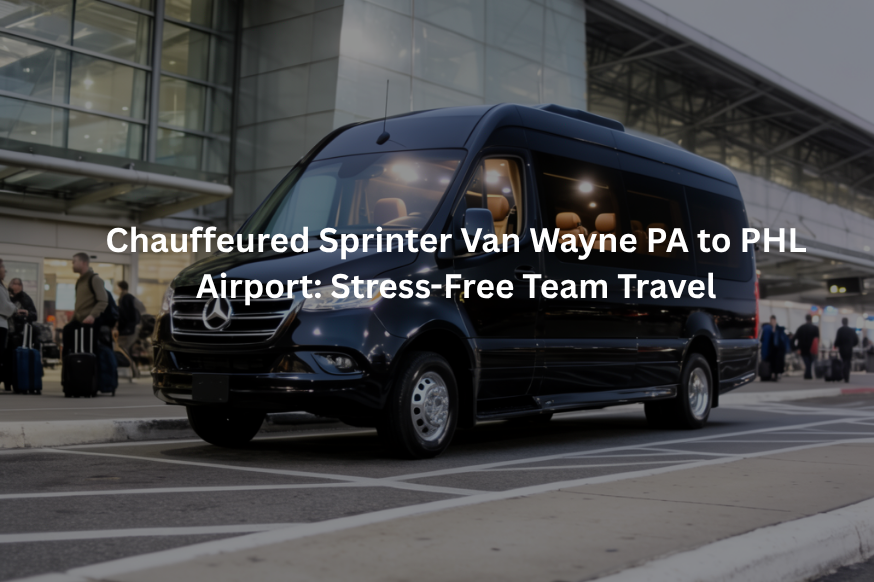
Mercedes-Benz Sprinters are the workhorses of mid-size corporate event transportation. An executive-configured Sprinter can carry 10 to 14 passengers in a professional environment, making it ideal for hotel-to-venue runs, speaker transfers, or moving a department from one campus to another.
Minibuses and Charter Coaches scale up for larger attendee groups. A full-day conference with 80 attendees staying at three different hotels might run multiple coach circuits throughout the day. A holiday party for 150 people may require a coach from a central location to the venue and a scheduled return run later in the evening.
Limousines and Party Buses are appropriate for client entertainment, executive dinners, and end-of-event celebrations rather than functional shuttle service. They serve a different purpose and shouldn’t be confused with operational transportation vehicles.
| Vehicle Type | Passenger Range | Best Use Case |
|---|---|---|
| Executive Sedan | 1 – 3 passengers | VIP transfers, individual executives |
| Luxury SUV | 3 – 6 passengers | Small teams, clients, luggage-heavy travel |
| Sprinter Van | 10 – 14 passengers | Hotel shuttles, staff groups, speaker transfers |
| Minibus | 15 – 30 passengers | Mid-size conference groups, venue circuits |
| Charter Coach | 30 – 55 passengers | Large groups, conference shuttles, offsite events |
How to Structure Airport Transportation for a Corporate Event
Airport pickups for corporate events deserve their own planning category because the variables are more complex than a standard shuttle run.
Attendees arrive across multiple terminals at different times. Flights are delayed. Groups that were supposed to travel together end up separated. Someone’s bag doesn’t arrive.
A structured airport approach for a Blue Bell-area corporate event typically involves:
Wave coordination. Rather than sending individual cars for individual arrivals, coordinate arrivals into pickup windows. Attendees landing within a 90-minute window share a vehicle or shuttle. Communicate this clearly in advance event logistics so attendees know to look for the designated vehicle.
Flight monitoring. A professional chauffeur service tracks incoming flight numbers rather than relying on the booked arrival time. When a flight from Chicago lands 40 minutes early, or when a connection from Atlanta is delayed by an hour, the transportation plan adjusts rather than leaving a waiting passenger or an empty car.
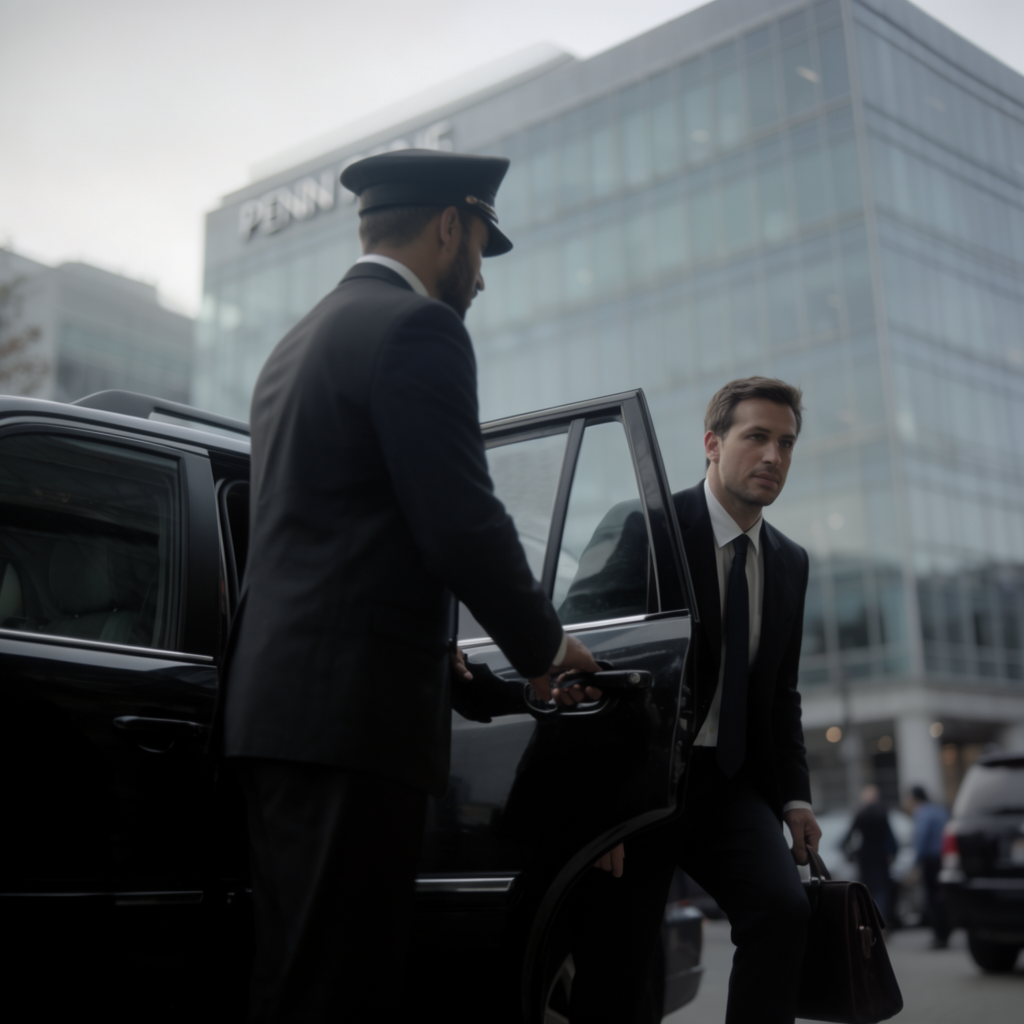
Meet-and-greet for VIP arrivals. For executives, speakers, or senior clients, a driver inside the terminal with a name sign at baggage claim is a standard and expected part of executive airport service. It eliminates the confusion of a curbside pickup when the passenger doesn’t know which vehicle to approach.
PHL-specific logistics. Philadelphia International Airport’s terminal layout spans A through F with vehicle staging in the central lots. For large groups, confirm with your provider whether they stage vehicles in the cell phone lot and pull forward to the curb at arrival notification, or whether they use meet-and-greet inside the terminal.
Planning the In-Event Circulation
Once attendees are at the venue, transportation doesn’t stop. Corporate events regularly require movement between locations during the event itself.
A regional conference based at a hotel in Blue Bell might include breakout sessions at a nearby facility, a client dinner at a restaurant in Ambler or Conshohocken, an optional evening activity, and then a return run to hotel properties spread across multiple addresses.
Managing this requires scheduled vehicle circuits rather than on-demand pickup. Set departure times from each location. Communicate those times to attendees. Have a chauffeur or designated coordinator at each departure point.
What goes wrong without this structure: attendees arrive at the pickup point and find no vehicle. The vehicle is circling because no one confirmed a drop-off location. Different groups depart at different times and the vehicle runs out of capacity for late arrivals.
A professional transportation provider serving corporate events can assign a dedicated dispatcher for large programs. That dispatcher coordinates all vehicle movements during the event, communicates between drivers in real time, and handles changes as they arise.
Blue Bell’s Specific Venue Landscape and What It Means for Transportation
Several venues in and around Blue Bell serve corporate events regularly. The transportation needs differ based on their locations and physical characteristics.
The Route 202 corridor running through Plymouth Meeting and Blue Bell connects to major hotels and office parks. Vehicles accessing this corridor during morning and evening peak windows should build 15 to 20 minutes of additional buffer, particularly for access to and from the Pennsylvania Turnpike.
The North Wales and Horsham corridor includes multiple pharma and biotech campuses that host significant corporate meetings and conferences. Hotel properties on this corridor include options along Route 611 and near the Welsh Road interchange. Shuttle circuits connecting hotel blocks to campus venues work well with Sprinters running scheduled 30-minute loops.
For events that move into Center City Philadelphia for a dinner or entertainment component, the driving time from Blue Bell is approximately 30 to 45 minutes depending on the hour and the specific destination. Events that plan a Center City dinner on a Friday evening should account for I-76 westbound congestion on the return.
VIP Transportation Within a Larger Corporate Event Plan
Even when the majority of attendees are handled through shuttle and group transportation, individual VIP transportation usually needs to run separately, and on a completely different standard.
Speakers arriving the morning of a conference don’t want to share a shuttle with 12 other attendees. An investor visiting a Blue Bell facility for a presentation has a specific arrival and departure window that doesn’t align with a general group circuit.
The practical approach: designate a small number of executive sedans or SUVs specifically for VIP movements, keep those vehicles separate from the shuttle fleet, and have a single point of contact managing their schedule directly.
Delux Limousines regularly handles the VIP transportation layer within larger corporate event programs, including individual executive transfers, speaker pickups at PHL, and hourly standby service for client visits to Blue Bell-area offices and conference facilities. A full overview of service configurations is available at dltsl.com/services.
The Consolidated Billing Advantage
For companies running corporate events regularly or managing ongoing executive travel, the billing structure matters almost as much as the service quality.
When transportation is booked trip by trip across different providers and paid through individual expense reports, the administrative cost is significant and the spend data is fragmented. A corporate account with a professional provider consolidates all bookings under a single billing relationship.
What that typically includes: centralized reservations through a single contact or portal, monthly or event-specific invoices with itemized trip detail, receipt generation without requiring individual employee submissions, and billing codes for cost center allocation if needed.
For travel managers and executive assistants coordinating transportation for multiple Blue Bell-area executives or a multi-day corporate event, this structure removes a significant amount of administrative overhead.
To discuss corporate account setup, reach out directly through LinkedIn or use the contact information at the end of this article.
What to Prepare Before Requesting a Corporate Transportation Quote
The quality of a transportation proposal is directly proportional to the quality of the information provided when requesting it. Vague requests produce vague proposals. Detailed requests produce actionable quotes.
Before contacting a provider, have the following ready:
Event details: Date, duration, venue address, and whether the event spans multiple locations or days.
Passenger information: Total attendee count, estimated VIP count, group sizes for shuttle purposes, and whether attendees are coming from a single hotel block or multiple properties.
Airport data: Expected number of airport arrivals and departures, the primary airport (PHL is standard for most Blue Bell events), and the general arrival window. Include any international arrivals that may have different terminal requirements.
Vehicle preferences: Whether the company has a preference for specific vehicle types or has branding requirements that affect vehicle selection.
Schedule: A rough timeline of the event, including when shuttle circuits need to run, when VIP pickups are required, and when the event concludes and return transportation begins.
Billing and account details: Whether this is a one-time event booking or the beginning of an ongoing corporate relationship.
Client reviews from other corporate users are available on Yelp for anyone researching service reliability before committing to a provider.
Putting the Plan Together
Corporate event transportation in Blue Bell’s suburbs works well when it’s treated as a logistics project rather than a last-minute booking task. The geography of Montgomery County, the spread of hotels and venues across multiple corridors, and the mix of individual executive needs and group employee travel all require a structured approach.
The core principles that make it work: choose vehicles that match the function rather than just the headcount, plan routes with realistic traffic assumptions, separate VIP and general employee transportation into distinct service tiers, and work with a single coordinated provider rather than multiple disconnected bookings.
Delux Limousines serves corporate clients throughout the Blue Bell area and greater Montgomery County with a professional fleet and the capacity to manage multi-vehicle, multi-day event programs. Whether the need is an executive sedan for a single arriving speaker or a full event transportation plan covering airport pickups, hotel shuttles, and VIP circuits, the conversation starts with the right information.
Send your event details and request a corporate transportation proposal here
Call: 610-871-8784
WhatsApp: 267-988-3392
Email: reservations@dltsl.com